Five Minute Friday: fear

Our first week of summer has officially begun – defined for us as the time between preschool’s end mid-June and pre-K beginning in early September. And we are trying to find our new rhythm, with stops and starts along the way. More to come in a future post. For now, though, I return to Five Minute Friday – five minutes of free writing on a given topic every Friday. Hosted by Kate Motaung.

***

fear

photo from: findingthegracewithin.com

Fear: the four-letter word that leaves us trembling. It can feel like a vague, nagging sense of dread playing in the background of our days like an unwanted soundtrack. It can pierce through our souls and bodies, leaving panic and a racing heart in its wake. It can be warranted – like what I felt the day I saw planes take down twin skyscrapers in New York City. That became an image for a generation of a world that was no longer as safe as we thought it was. An image for our fear to rest upon. Fear can be seemingly inexplicable, too. This is the “free-floating” variety, that can rest upon anything in its path.

If we let it, fear shrinks our worlds. Fear leaves people isolated in their homes for decades. It keeps us from engaging those different from us. The irony is that the more we listen to fear, the bigger it becomes.

The only way to be free of fear is to act against it. To go to church when you’re newly aware of a headline proving there is truly no *safe* place in this world. To board a plane to a dangerous area of the world to defend what’s good and true – to keep evil from winning. To take a pen in hand and write the most honest thoughts of your heart. To admit our fears together – this begins to be the pathway out of fear. Shall we?

***

when you dread summer (and not for the obvious reasons …)

I’ve been procrastinating this post for awhile. It feels like if I don’t write it, it won’t be true. Yet we all know that’s about as effective as saying you’re not hungry when your favorite dessert shows up on the after-dinner tray. (I caved and totally ate the peanut-butter pie while out for dinner last night.) Sometimes I wonder if I’m too negative or brooding. But, hey, that’s what writers are known for, right? And add “counselor” to my job description, and it’s a wonder I don’t spend all my moments looking at/being weighed down by the dark side of life. For there is much darkness that is real. And yet the light wins in the end, and I have hope that it’s already breaking into this broken-down world. 

But sometimes the weight of all the burdens catches up with my soul. And I’ve felt like I can’t quite rise to the occasion of being fully present in my life lately. Part of it may be “compassion fatigue,” experienced by full-time caregivers, health providers, and ministers. That would fit my life description since as a mom to 4-year-old twins, pastor’s wife, and counselor, I am all of the above. So I’m sure that’s a portion of the mist that seems to shroud the days.

Yet I’m also a girl who *loves* summer and all that it means. Beach days, bright sunshine, late sunsets, crickets’ songs and lightning bugs. This year I cannot seem to rise to my usual “summer love.” And it bothers me. Winter blues? Well, I always expect those. But summer doldrums? They’re foreign to my existence. Sure, summer is different now since having children because these are weeks and months without the break of preschool for them. My summer reading (and project) list must be shorter now than the fall-winter one, because I actually have less time alone rather than more. But this alone doesn’t seem to explain the low-grade numbness I feel (if numbness can be felt).

Then I consider our recent history – the history of my church community. And tragedy seared us about midway through last summer. I find myself cringing within, emotionally bracing for impact as the season turns and it’s summer again. It was a beautiful, typically-bright July afternoon when trauma struck through the deaths of a mom and her daughter, leaving darkness in its wake for the surviving husband/father and daughter/sister. It was one of the greatest privileges of our lives for my husband and I to be able to be first responders to their grief. To sit and cry with them when it was all so fresh and so confusing. To simply offer our presence and our tears. It has been beautiful to watch our community of faith surround them and carry them through this past year. It has been evidence of God’s grace to witness the strength of these two as they have learned how to do life anew together.

And because of the carrying-with of their grief, traces of those tears still remain in my heart and soul. I would have it no other way. That combined with a year of nonstop everything and insufficient rest is probably contributing to the distancing I feel from what’s good and true and beautiful of life, and of summer particularly.

What will be the path of finding my way back to joy? Of refusing to let darkness write the story of this summer through the never-ending dread? It will be simple yet difficult. Putting one foot in front of the other. Speaking of my struggle while it’s in the present (not waiting for the retrospective – “it’s all over and here’s how God met me”). Creating structure for my soul and our family that includes lots of rest, refreshment, and fun. Soaking my soul in the words of hope whether I feel like it or not. Words like,

“In this world you will have trouble. But, take heart, I have overcome the world.” – John 16:33

Yes, dread is a normal emotional response to past trauma, and yes, compassion fatigue calls for rest and a break, but no, it won’t have the last word. Jesus has overcome whatever it is you and I dread. This is reason for hope. Hope that looks like walking out of the mist and embracing what’s good and real and true about life, especiallysummer.

Embracing imperfection, part 3 (or how imperfection frees me to create)

I realize I’ve been away from this space for longer than usual. A few good reasons: vacation with extended family in South Carolina, and finishing the first draft of my book (Unashamed: healing our brokenness and finding freedom from shame, Crossway – to be published next June 2016). So I am reposting a favorite from last year in May. It was part of an ongoing series of “embracing perfection.” You can read the others here: part 1, part 2, part 4, and “July edition.”

****

One of the first assignments was to draw a self-portrait. In crayon, no doubt. Sounds simple, childish even. And is that what paralyzed me in front of the box of 64 Crayolas? I would dare to take one crayon out, only to have to put it back because it didn’t seem quite right. Do I start with the eyes? or the nose? Or the outline of the face?

Trying to create art paralyzes me sometimes. And it’s my drive for perfection, to be perfect and produce perfection that often holds me back. Nestled underneath that desire is a fear of imperfect, of failure, of disapproval and messing up. When the art I’m working on is visual colors on a page, it can be easier to jump over that hurdle of fear mixed with desire – but when the art is words capturing ideas on a screen. Aahh. That can stop me in my tracks. I can honestly say that most times I begin to craft a blog post, I start with beating down the doubts inside of, “you have nothing to say … what new thing can you add to this topic that hasn’t already been written well [better] by someone else …?”

But I am called to show up and to offer myself, my story, my words, my heart. All of those are imperfect. The more you know any of me, the more you’ll see my imperfection. Yet I don’t want that to paralyze me, just like I don’t want that to hold you back from offering yourself either. In fact, when you (my friend, sibling, parent, husband, pastor) admit your imperfection, it frees me to acknowledge mine. And also to find strength not to allow my own imperfection hold me back from my offering. 

Emily Freeman is teaching me through her book A Million Little Ways. I read this yesterday, and inside I said “yes!”

Knowing we can’t fully live the words we call others to live can keep us from ever saying the words at all. … Just because you can’t fully live your life the way you so long to live it doesn’t mean you don’t fully believe it’s possible with all your heart. And it doesn’t mean you are forbidden to share what you’re learning unless you are living it perfectly. Christ is in you and wants to come out through you in a million little ways – through your strength and also your weakness, your abilities and also your lack. … God calls us his poem. And the job of the poem is to inspire. To sing. To express the full spectrum of the human experience – both the bright hope that comes with victory and the profound loss that accompanies defeat. We must make art, even in our weakness.

So what’s your poetry? Your imperfect poem you’re being asked to write today? For me, it’s a poorly rhymed poem expressing thanks to the preschool teachers my girls have learned from and loved this year, their first year of preschool that ends today (sad!). I offer it here, not because I think it’s beautiful art but because it’s imperfect art. Not my best poem and certainly won’t be published anywhere, but here’s to hoping that it will bring big smiles to the two women who have certainly brought big smiles to my three-year-old daughters in their first school experience.

You have taught us our letters,
And now we can count much better;
We know how to spell our names,
And follow the rules of a game.
 
We have learned to share
Under your tutelage and care.
We stand in line and wait
And can look at a calendar to find the date.
 
You’ve introduced us to school,
And how to follow its rules.
You’ve welcomed us with love
Reminding us of God above.
 
For all of this we say THANK YOU –
And that next year we will miss you! 

Shame’s lies to victims, perpetrators, and their church(es): a response to the Duggar scandal

curtainsShame’s insidious fingerprints are all over the latest abuse-cover-up scandal involving Josh Duggar, the oldest son of the Duggar family of 19 Kids and Counting fame. How could such abuse be covered up for 12 years by a family living life “in the open”? A family with a reality TV show, no less. Shame thrives with a conspiracy of silence, and abuse of all sorts provides ample fodder – but particularly so when you add in the factors of abuse of a sexual nature, abuse of a minor, a perpetrator who’s publicly known, and a perpetrator who belongs to a faith community. As a counselor and a Christian involved in church my entire life, I have seen these scandals played out in a hauntingly familiar pattern over and over again. I want to suggest a few ways that shame keeps an abuse scandal secret in such a scenario.

Shame’s whispered lies for the victim:

1 – It’s up to you to protect your perpetrator’s reputation by staying silent.

2 – God forgives him/her, so why can’t you? (And forgiveness=forgetting.)

3 –  What happened wasn’t really that bad.

4 – You did something to deserve it. You didn’t say “no” – or you were dressing “immodestly” or allowed yourself to be alone with him/her.

5 – To speak up about the abuse would bring embarrassment to you and your family. It’s best to deal with it alone and not bring anyone else into the shame you feel.

Shame’s protective shield of lies for the perpetrator:

1 – It only happened once (or twice or 3 x’s) … so it’s not that big of a deal.

2 – I was young and immature, and I didn’t know better.

3 – The less it’s discussed, the better off I will be.

4 – Because God forgives my sin, I don’t need to ask forgiveness from my victim or talk to the appropriate authorities.

5 – S/he made me do it. It’s really his/her fault.

Shame’s lies believed by a faith community who discovers the abuse (and doesn’t report it immediately): 

1 – God’s reputation is at stake, so it’s best to keep this quiet and not let anyone else know.

2 – We can handle it. No need to get the authorities involved.

3 – The laws of the land about mandated reporting do not apply to us – we’re under God’s law.

4 – It’s up to us to protect the reputation of the perpetrator.

5 – God’s mercy negates God’s justice.

Shame’s role in such a scandal is to exacerbate it – keeping the victims and the perpetrator locked in silence – a place where neither of them can find the healing they truly need. It would have been merciful for the abuse to have come to light 12 years ago instead of today. There would be much less of a scandal-element for the Duggar family, and certainly there would have been more freedom for the victim(s) to know and see justice being done. And to be protected from contact from him. And even for future victims to be rescued from the same.

If you find yourself identifying with any of these places – that of victim, or of perpetrator, or of a faith community member who’s covering up abuse – speak up. It’s the only way shame begins to lose its power. And it’s the only way full redemption and restoration can begin to occur.

*Shame is the subject of my upcoming book with Crossway – shame of all varieties and the freedom and healing that comes through Christ. Expected release date of June 2016.

Imago Dei, housework, and writing

“There are value currencies we operate in most of the time. The leading ones for women are beauty, money, status/fame, and – in some circles – domesticity. What complicates our question of value even further is that we live under the belief that value is scarce. So it’s not enough to be beautiful, but for me to be most valuable, I have to be the most beautiful.”

Thus began a thought-provoking evening with Hannah Anderson last Friday at a local coffeehouse, sponsored by the women’s ministry of our church, Trinity Presbyterian. Hannah spoke with deep insight and intelligence, matched to accessibility and candor that I found myself nodding along with many times. Hannah is the author of the excellent book, Made for More, which was my September 2014 book of the month. I’ve also made her one of my long-distance writing mentors (she doesn’t know that) since I met her last summer when I was beginning to get serious about focusing on writing. She was tremendously encouraging then, telling me about her decision to stop running from her calling to write and to devote herself intentionally to writing for a few years and see where  it went. For her, that’s included her first book released last year, and a regular blog at sometimesalight.com. She’s had speaking engagements arise from her writing, and we who heard her were privileged to be part of her circuit. She talks about “stewarding her message” and invited each of us to walk according to our value that’s not scarce but abundant because it flows from an infinite God. 

The theological term is “imago Dei” – made in God’s likeness. And it all began in Genesis, at our creation when humans were breathed into existence by a God desiring to reflect his very nature. This gives every woman (and man) infinite worth and value. Yet it’s a value that’s been marred by sin, and so we are also all desperately in need of restoration. This value has also been given to us in Jesus Christ (not earned).

And therefore, we are to cultivate the earth – our corner of the kingdom entrusted to us by God, using the gifts he has bestowed upon us. The value is the same regardless of the task, because it’s done as a reflection of who we are. Janitorial work and housework are elevated beyond their menial status usually assigned from within the world’s values. “Big” work like being the President and researching cancer are grounded by the humility that these, too, are work assignments received as gifts from the God who created us. We all have different roles.

In answer to a question of how this could apply/transfer to parenting, Hannah answered with a smile that her favorite thing to do is bring each of her children to their room and give the command, “Cultivate!” We all laughed – and made mental notes to do the same. She asked the question of each of us – “What have you been entrusted with to cultivate? In what work are you called to bring forth fruit? Who are your nearest neighbors that you are to help flourish?” 

And personally, I’m realizing the way I’ve neglected “home and hearth” in order to focus on my “big writing project.” Both are equal. Both are needed. I needn’t be apologetic about my writing, but neither am I to overlook the toilet that needs to be scrubbed or the children who need to be bathed and fed. [Disclamor: they have been regularly bathed and fed – the neglect has not sunk to that level … but it sounds more poetic this way.] These are my immediate opportunities to live out of imago Dei – what are yours?

Five Minute Friday: “follow”

I join with the Five Minute Friday community of writers in this weekly five-minute writing exercise. This week is the word “follow.”

****

followTo be followed is an honor. Each time I see a new “follower” on my blog or Facebook page or Twitter, I get excited. Yet the following of social media connections is a far cry from the original following Jesus discussed. He said, “Follow me, and I will make you fishers of men.” Not only does it sound odd to be invited to be a “fisher of men” but “follow” can feel vapid. I am fine with following Jesus social-media style, meaning that I check in with him when I feel interested in knowing how he’s doing and see if there’s anything particularly new or interesting he’d like to share with me. Following is very much on my terms, and the pace is leisurely.

Yet when Jesus asked his disciples to follow him, he was asking them to leave behind their former way of life entirely and join with him in his nomadic travels on a journey that would end with the horror of the cross and the surprise of resurrection. He was inviting them to yoke themselves to him, to be his 24/7 disciples who would eat every meal with him and learn at his feet daily. This is quite different than when I have a “follower” on Twitter. More often than not, it’s not someone I know or even am likely to meet. They are “following” me when they don’t know much about me – nothing more than what I’m revealing in small intermittent and infrequent bits, limited to 21 characters. And the same is true when I choose to “follow” them back.

To truly follow Jesus requires more commitment. It requires nothing less than all of me, heart, mind, and soul.

****

4 Challenges to Parenting in an Individualist Culture

Parenting has never been easy. And as Christians, parenting can be especially difficult in our current, contemporary society. Here are 4 challenges I think most Christian parents face when it comes to raising their kids in a secular culture.

1. Motherhood requires giving up “my life” as defined by our culture.

Part of my journey as a mom these past five years has been fighting against my own entitlement as I lay down every single part of my life for my children. It’s made harder because I’m surrounded by a society that says that individual happiness is everything. We are bombarded with messages from billboards and Oprah’s book list about secrets to happiness and self-fulfillment. I have an appetite for self-fulfillment, and these messages promise to fulfill my craving. How can I get by with minimal sacrifice as a parent? [read the rest of the article over here, where I’m featured on iBelieve.com]

for all the spiritual moms on Mother’s Day

photo from ksl.com

photo from ksl.com

This is for you, the often overlooked one who won’t be officially included in this weekend’s celebration, but who has birthed many, many souls into being. You have done perhaps harder work than that which will be officially honored this Sunday, harder in that it is less recognized for the great personal sacrifice and deep loneliness you’ve carried in your birthing work. As you have ached to mother physical children, you have continued to nurture spiritual children. You have been available all hours of the day and night for the woman in distress, the teen on the brink of ending it all, or the 23-year-old who just had a devastating break-up, or for a peer crippled with the agony of discovering her husband’s affair. You have borne all of this, and more. You have cried along with them, and you have wept hidden tears for the husband you’ve always dreamed about or the children you wish God had given you.

You, like Hannah in the Bible, may have wept agonizing prayers of tears as the aching desires of your heart overflowed. Others have likely misunderstood you, offering you petty cliches that while true felt trite. Like, “Jesus is your husband,” and “God has given you more time to serve the church.” Perhaps what you needed first was an understanding embrace, or one willing to cry with you at the decades of disappointment you’ve carried. Yes, God has met you amidst your loneliness, and he has provided for you, but it has not been easy nor is that need all in the past tense. You know that because you don’t have physical children, more needs will arise and you’ll continually have to ask God for provision. You are in many ways a modern day widow, even if you are married, in that the society often overlooks you.

I want you to know today that you are seen. You are known. And you are invaluable to the kingdom’s advancing and the fabric of church communities. I pray that my daughters will have spiritual mothers like you available to them when I just can’t help them because I’m too close to their situation. I pray that whether my daughters have physical children or not, that they will, like you, spiritually nurture and care for many souls. I pray that in their waiting days – waiting for marriage, or for conception, or for grief of what’s lost to pass – that they will be able to think of at least one of you who will cheer her on by example.

I’m thinking of my friend who ministers to the sexually broken and hurting, courageously risking much to bring the hope of the gospel into these places of confusion and pain. I’m thinking of another friend who has helped develop and teach Jesus-centered curriculum to women and men across the world. And of another sister who is assisting in administration of a Christian counseling center, while she also pours into the lives of many women through personal counsel. Yet another woman comes to mind who has welcomed missionaries and missionary candidates for decades through her gracious and warm hospitality. I’m thinking of you in my church who bolster my heart with your words of encouragement and your endurance in the faith through your care for others and your support of us. I’m thinking of my clients brave enough to speak of how difficult it is to be single, to be childless, of how the world often seems to pass them by (Sunday mornings can be hardest).

I’m thinking of you, and I want you to read this as a heartfelt note of appreciation on behalf of all of your spiritual children who will rise up and call you blessed on the last day. Thank you for your hidden service, your poured-out love, your difficult endurance, and your courage to keep on going step-by-step. I pray that this Sunday you will feel God’s smile upon you in tangible ways. Might we who know 1-2 of these such women be part of God’s words of appreciation to you?

what I learned in April: Uber, Rifle Paper Co, and Coloring Books for adults

It was a busy month, but then again I think every month lately has been. April was busy in a different way because my husband and I were out of town for 5 days at a conference/getaway. Which made the rest of the month … well … a bit exhausting, between getting ready to go out of town and then coming back from being away and having to catch up on life. It caught me off guard – but I’m getting ahead of myself.

Here are a few things I learned in April (linking up with Emily Freeman):

what we learned in april

1 – Koala bears are not bears, but marsupials. We learned this from a new favorite book recently checked out from the library: Xander’s Panda Party.

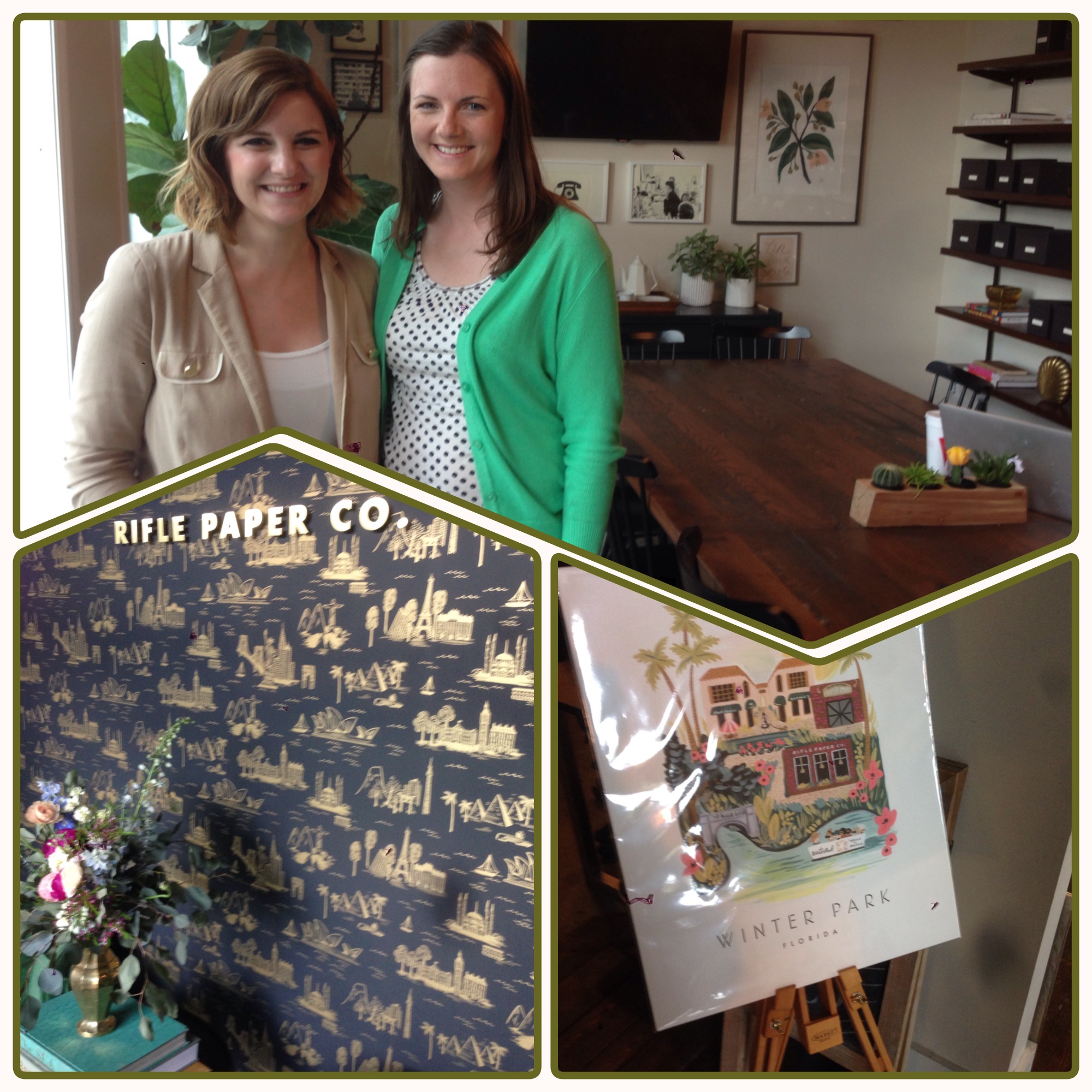
IMG_86722 –  Rifle Paper Co. and its designer/founder are pretty amazing. My husband grew up with the owner/designer, Anna Bond, and so we were able to get a personal tour of their company/storefront in Winter Garden. I was in awe of the remarkable growth in five years, and of Anna’s creativity and unassuming spirit. She graciously autographed a few items that I bought, and put up with my starry-eyed admiration when I asked to take a picture with her.

photo from nytimes.com

photo from nytimes.com

3 – Uber is the best way to get around Orlando, Florida. We tried this alternative-taxi service available through a phone app and loved it. I mean, within minutes of requesting a ride, a personal driver showed up at the very corner of Winter Garden where we were waiting.

4 – Crossway publishing company is a great fit for me as I write my first book with them. It’s on the topic of shame, and I’m unashamedly happy to be part of such a team. I was able to meet many of them in person for the first time at the conference we attended in Orlando (The Gospel Coalition).

5 – Jen Wilkin, Christina Fox, Jen Pollock Michel, and Bethany Jenkins are my newest favorite writing-friends. They have each written extensively for several sites including TGC blog, Her.meneutics, and/or Desiring God, and I wish we all lived closer and could hang out and talk about the highs and lows of writing and finding God in the midst of the process together.

6 – I can feel tremendous (self-imposed) pressure to go to all the scheduled events of a conference, when what I may need more is space to rest. This was the double-edged sword for me of the conference we attended: I didn’t want to miss anything, but it was a fairly packed schedule and so I also didn’t want to miss out on anything great either. Added to this was the fact that Seth and I needed/wanted a getaway just the two of us – and instead were part of a conference attended by 6,000. Next time: two separate trips for two different purposes!

7 – Doing too much without breaks leads to a break-down. The week after returning was rough for me. I felt tired yet needed to be “on” as a parent, counselor, and moving assistant for my in-laws. Note to self: working for days on end without rest/good breaks is not good for the soul or body.

coloring page8 – Best new trend worth trying: coloring books for adults. Seriously. Read this article, and then purchase your own here.

the value of the hidden work of love

“How do you do it all?” It’s a question I often hear in response to the oh-so-complex question of, “What do you do?” When I reply that I’m a mom to 4-year-old twins, pastor’s wife, part-time counselor at our church, and writing a book – it does sound quite “impressive” (or overwhelming). I often reply tongue-in-cheek – “Not very well!” – to the aforesaid question. Most people don’t believe me. Except for those closest to me.

Seth, my husband, sees the dishes and laundry piling up alongside my frustration to try to do it all. My daughters experience the always-weary mama who too often opts for screen time so that I can finish a writing project or just get a nap. (They’ve almost completely dropped their afternoon nap.) My parents and in-laws and siblings and siblings-in-law and nieces and nephews and aunts and uncles and cousins don’t get as much “Heather time” as I wish I could give them. Life right now feels like a delicate balancing act that I can’t do too well.

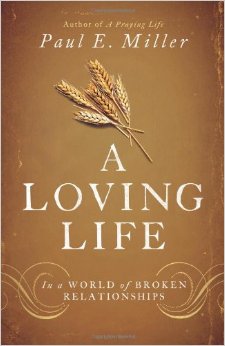
loving lifeAnd, true, I need to learn to prioritize (and identify “posteriorities” as DeYoung describes in Crazy Busy). Yet I also need to learn to embrace the hidden work of love that is my life with a family of young kids. To see this as a grounding point of my life rather than a distraction from work/writing/etc. Enter the so-good and so-convicting words of Paul Miller in A Loving Life

We usually recoil from the cost of love, thinking it is an alien substance, but it is the essence of love. … True glory is almost always hidden – when you are enduring quietly with no cheering crowd. … We experience a strange and powerful presence of God during those moments of hidden love. When you hang in there on the journey of love, when you endure and don’t take the exits of distance and cynicism, God shows up.

The parts of my life that are public are quite frankly, the easiest parts of life right now. Sure, it takes time and thought and work to prepare a talk for women, or to write the next chapter of my book, or to teach Sunday school, but I always get affirmation in these public areas of service. Motherhood and marriage? Not so. If I am loving my daughters and husband well, there is not an adoring crowd to let me know. If I’m not loving them well, I can hide this from others or gloss over my failures as “hard days/weeks/stages.” For me, it is this hidden work of loving family that shows me where I most desperately need the grace of a Savior and the endurance of the Spirit. 

Miller talks about this in his own life, capturing it in this sentence that aptly describes the past few weeks after a great deal of public ministry:  “God was giving me a hidden work of love to balance out the public ministry of teaching.” He talks about this in the life of Ruth, saying that in relation to Naomi, she “cheerfully pursued the bondage of love.”

It is so counter-cultural and counter-self-actualization to love like this. Which is why I cannot love like this without Jesus’ life at work in me. As Jesus’ love takes deeper root in my heart, there will be more joy in the hidden work of love – which will have the happy effect of enriching the public ministries of love, too. I end with this description:

…if I love only when I feel like it, then I’ve really not understood love. … Love like this strips us of self-will and purifies our motivations. It is surprisingly liberating because we’re not trapped by either our feelings or the other person’s response. When neither preserving the relationship nor our feelings is central, we’re free to offer the other person a rich tapestry of love.