I have been at a loss for words. Understandable, after what we have all mourned as a community. And yet problematic as one who processes through writing, and one who seeks to give comfort through words of the same. It’s almost been two weeks since tragedy struck our community through the unexpected death of a mother and daughter. I think what feels both haunting and comforting is that life goes on. We have returned to our routines, and this feels wrong, for how can we ever really return to a “before” when tragedy interrupted our lives so forcefully and so permanently? Yet in all of the grief research, this very routine normalcy is part of how we grieve and process. Life has to have a rhythm, and it continues to roll on despite the times when I feel it should stop for awhile. Pause, let us catch our breaths and be able to absorb how life has now changed. It feels like a betrayal to grief that I should return to weekly grocery shopping and breakfast/lunch/dinner and reading stories and work-outs at the gym. All of this should be different. And it is, but it isn’t.
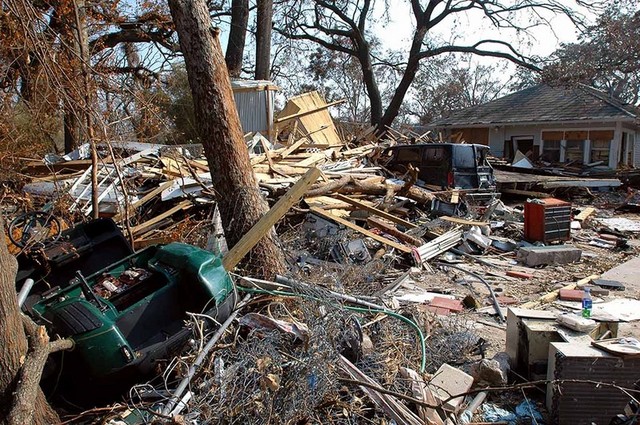
katrinadestruction.com
The analogy that comes to mind is walking through New Orleans after Hurricane Katrina devastated that city. I was there with a team from my church to contribute to the ongoing rebuilding efforts. And four years later, there was still ample evidence of the destruction. Shops boarded up; homes crumbling in disrepair; areas of Ward 9 barely touched because of insufficient resources to rebuild. We began that week of rebuilding with a tour of the devastation. That helped us to have a context for our work, and motivation to work, and compassion as we worked. Could it be similar as we walk through the aftermath of this tragedy as a community? That now is a time for surveying what’s broken as we pray and grieve and ask about what and how we can begin to rebuild.
We will do this in very apparently ordinary ways. Like bringing a meal to provide immediate relief to the surviving father and daughter, and not being afraid to reach out and call or email to say, “I’m praying for you. What do you need today?” I remember the words from my counseling professor Ed Welch in a class on how to enter into the suffering of others, and he said simply,
You show up. And you continue to show up. You aren’t afraid to reach out and to contact the person [grieving or suffering an unspeakable tragedy].
If you were impacted by this tragedy, how is it changing you? What’s the damage that will need to be repaired? Such as theological questions that came unhinged that will now need deeper foundations. Or categories of “how life should work” that seem to be obliterated. Even personal questions of how to support friends in need and how to know whether or not someone is in a desperate place and how to ask for help when I need it. All of these are part of the communal story of grief and response to tragedy. Let’s discuss them together and be changed for the good by such a tragedy. Couldn’t that begin to be part of the redemption story God promises to write, even (especially) here?
…For the Lord has comforted his people and will have compassion on his afflicted. (Isaiah 49:13)



 hidden glory