Take Ten for Thanksgiving

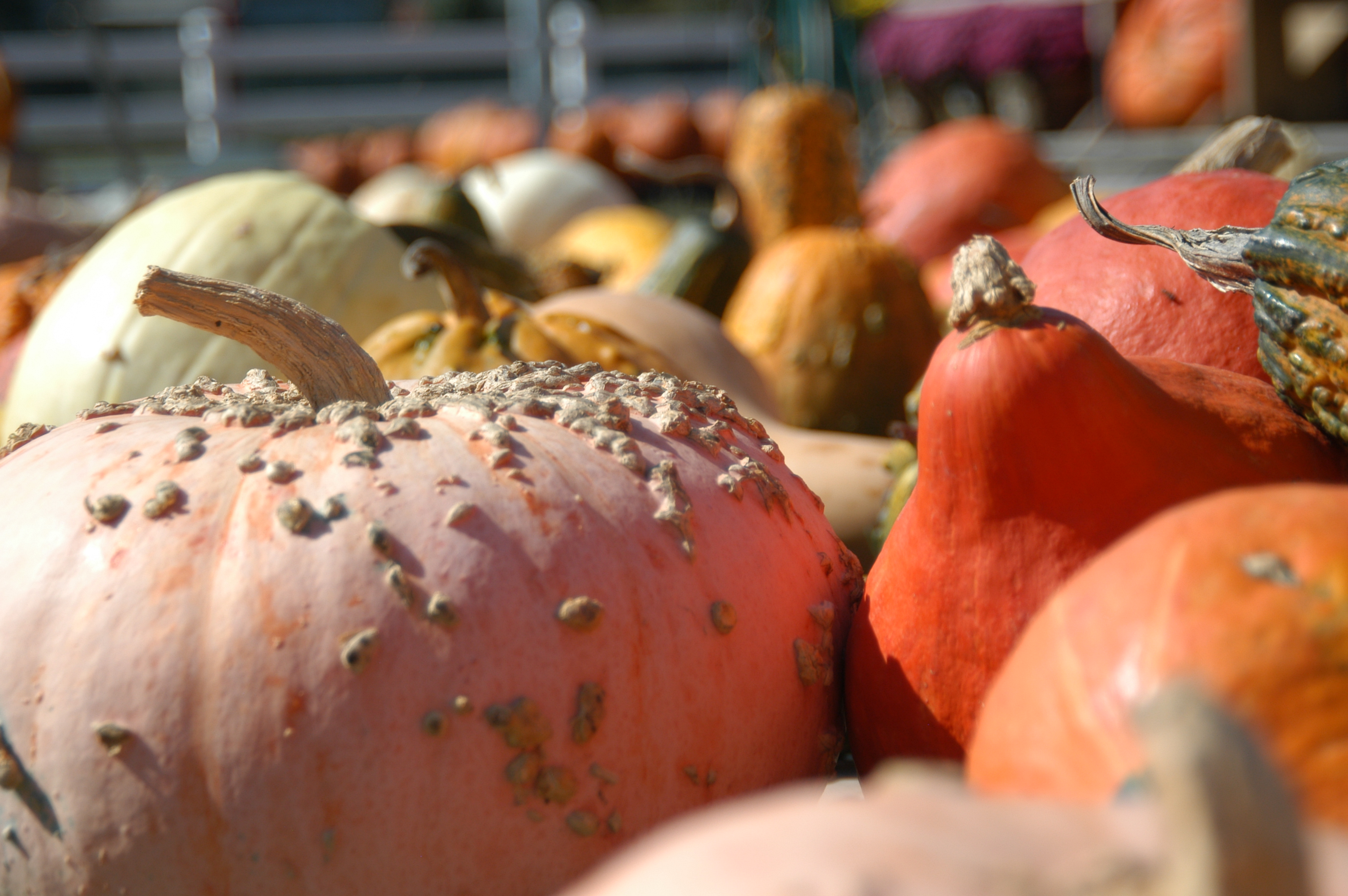
Fall PumpkinsAs I looked up the word “thankful” and its synonym “grateful” in the Merriam-Webster Dictionary, I thought about how I often throw those words around – particularly at this time of year – with no thought to what they actually mean. Hence the dictionary search. As I came across this compilation of definitions, what I have reason to be thankful for became more clear, too. And why I am not more thankful is a sad commentary for my lack of eyes to see, really see, all that surrounds me. I’m going to ask you to do something with me today. In between preparations for the big feast, or after your belly is full from feasting, take ten minutes to sit down and think of ten things for which to be thankful. (Thankfulness is a great natural antidote to the anger I’ve been writing about, too, by the way. An angry heart and a grateful heart rarely coexist at the same time.)

First, the definition:

  • conscious of benefit received
  • appreciative of benefits received
  • affording pleasure or contentment
  • pleasing by reason of comfort supplied or discomfort alleviated
  • well pleased, glad

Isn’t that eye-opening? Hopefully, that begins to get you thinking about some items for your thankful list. I wanted to take this even further. Thanksgiving for me as a Christian isn’t merely having warm feelings of general goodwill and thanks for life in general. Thanksgiving has an object: the Creator and Giver of all good things. Thanksgiving is to be part of my life as someone in relationship with God. One verse I found summarized Christian Thanksgiving quite concisely:

Psalm 75:1 – “We give thanks to you, O God;

We give thanks, for your name is near.

We recount your wondrous deeds.”

In those three lines, the writer of this ancient worship hymn instructs me about God-oriented giving of thanks.

  • “Giving thanks” is an action – a choice and a decision.
  • “We” – not merely individual, but corporate. Something we do in community, with our community, and on behalf of our community.
  • the direction of my thanks – God! Seems simple but often I find myself not thanking God directly. Or really attributing something I’m enjoying to another source, like my great ingenuity in thinking of how to manage my day to find some peace and quiet, my self-sufficiency, my bank account, etc. The ultimate source behind all of this is God. And as a Christian, I am asked to go straight to The Source with my thanks. This will help my heart keep worshiping.
  • the why of giving thanks – “for your name is near.” God himself is evident all around me, and he is present with me and within me by the Spirit. Who he is – his character – is very near to me. If I have eyes to see!
  • how to give thanks – remembering his wondrous deeds. This is a specific recounting of what God has done, with an implication of a sense of wonder and awe at the God who has done these deeds.

Here are a few of my “ten” when I sat down to recount specific thanks to God. I’d love to hear a few of yours, too!

  1. The beauty of barren branches against a wintry blue sky
  2. God bringing together a Carolina girl and a Jersey boy in Philadelphia to marry, raise twin daughters, and expand one another’s cultural experiences
  3. Parents who love God, Seth, me, and our daughters – on both sides
  4. Daughters who are teaching me how to love more fully
  5. Faith awakened at a young age with which to receive God’s greatest gift of grace in Christ
  6. A heavenly Father who’s known me from the beginning of time and pursued me with love

And I could go on. I hope that I will never stop. I’m about 300+ into Ann Voskamp’s “One Thousand Gifts” challenge. And you could just be beginning with your first ten! Read more at her blog here. And happy Thanksgiving!


on becoming two


We celebrated two with a fanfare of a birthday party, no theme other than good-old-fashioned-birthday – meaning we had balloons, birthday-themed plates, and two “cakes” designed from cupcakes. Almost all of the girls’ friends and neighbors came for a Labor Day cookout/birthday party. And good times were had by all.

But this isn’t a mommy-specific blog, where I ooh & aah you with all of my Pinterest-worthy aspects of our party. I love reading other blogs that do that, although I must admit that I can struggle with creativity-envy afterwards. Or I may be inspired by such blogs and Pinterest pins, just depends on where my heart is in a given day.

The twins becoming two has been a slow, ever-increasing process that began around 6 months ago as both the tantrums and the precocious nature blossomed. Now both aspects are in full bloom, which leaves me both laughing in delight and exasperated in anger in the course of a day (or 10 minutes). Many moments, it is wonderful to watch the way they will play together, yelling “Come find me!” and running away for her sister to chase her. They love their new sandbox on our back deck, and they end each day laughing and “talking” to each other as they drift off to sleep in cribs across the room. Other moments, I again feel the twin-pull that’s been present since birth. Of TWO very needy children in the same stage, wanting the same thing from their ONE Mommy. And I feel completely at a loss of how to respond. How do you triage the toddler who just got bitten with the toddler who bit her? The girls who are both melting down with fear or with tiredness or hunger and want to be held now while also expecting me to meet their need (of cooking dinner, for instance, or putting each down for a nap). I am faced with a sense of inadequacy in these moments. One that I should be used to by now, but which still feels hard. Maybe it’s more of a cumulative effect, building with each month, rather than one that goes away.

In one such moment, I desperately opened the Bible (rather than the cookie jar or Facebook or email), and this verse jumped off the page for me: “Therefore, let those who suffer according to God’s will entrust their souls to a faithful Creator while doing good.” (1 Peter 4:19) I’m going to take a big hermeneutical leap and jump straight to applying it to my life as a mom. I know that’s not the original context (persecution of the early Church was), but I think God who was present with those suffering Christians then also wants to be present to us when we suffer now in the self-sacrificial calling of motherhood. The frustrations of motherhood fit into this category of suffering according to God’s will. And so what am I called to do? Entrust my soul (what’s in danger of harm) to God, my Creator who is faithful. While continuing to do good. This is Christianity on the go. Spirituality that I can live with as a mom.

God says to us, “Keep doing what you’re doing. It’s good work. Yes, it involves suffering which will test and try your very soul. But I, who made you and created you, am faithful to care for you, strengthen you, empower you to continue to do good. Your suffering in the pouring out of your life for these little ones is according to my will for you. I who strengthened your Savior who endured this and more, will strengthen you also. By His very life – the life of Christ available to you, dwelling within you by the Spirit.”

I finally sat down to write this out because (surprise, surprise) I need to hear it again in this moment. The morning was lovely, I was able to get tasks accomplished after we played with a neighbor down the street, lunch was battle-free, and then naptime hit and they rebelled. My heart did so, too, in response. We are the same. We need the same Savior. My only hope for pointing them to Him is that I run to Him myself.

As a small comical ending, in reading “Your Two-Year-Old: Terrible or Tender?” (a developmental classic by Ilg & Ames), they concluded their book with some practical pointers that I recommend to myself and all of you fellow parents of two-year-olds. Doubly so, if they’re also twins:

THINGS TO AVOID:

1. Avoid any expectation that all daily routines will go smoothly. Even if you do your best, your child will not always cooperate fully.

2. Do not introduce any sudden changes in routine without warning or without some cushioning buildup.

3. Avoid any questions that can be answered by “No,” such as, “Do you want to have your bath now?”

4. Do not give choices when it matters.

5. Do not expect your child to wait for things or to take turns easily.

6. Avoid ultimatums, such as, “You have to eat all your lunch before you can go out and play.”

7. Avoid getting all upset by your child’s demands and rigidities. Try to see these behaviors not as badness or rebellion but rather as immaturity. Try to appreciate the wonder and complexity of growing behavior, even when it makes trouble for you.

8. Do not be surprised or upset at “No” or “No, I won’t.”

9. Do not take away or object to your child’s security blanket or favorite, bedraggled toy. Do not fuss at him when he sucks his thumb.

10. Do not expect your child to share easily with other children.

… and my personal favorite: 11. Do not be surprised if you are unduly fatigued at the end of the day.

Sound familiar, anyone? Yes, I see those hands! Though published in 1976, I’ve found it to be helpful in at least attempting to understand what’s going on with my 2-year-olds. Now, doing what they recommend as a result will take much more than my self-effort. See my thoughts on obtaining grace in other posts (and re-read 1 Peter 4:19).


Joy in my “lot in life” (Ecclesiastes reflections)

I don’t know about you, but most of the time when I hear or utter the phrase, “It’s just my lot in life,” there is the connotation of reluctantly putting up with what one wishes she could change about her life. In reading through a rather obscure and not often studied book of Ecclesiastes this summer, I am realizing that I’ve got it all wrong. To realize that God has given me my lot in life is meant to bring joy. Why? Not because life is easy – far from it. Ecclesiastes clearly portrays the toil and burden of life that often feels vain and meaningless. Toil, vanity, “striving after the wind,” are popular refrains here. But the writer of Ecclesiastes is pushing into life, seeking to see if God entering the picture makes any difference to life on earth.

I’m only a few chapters in, but he’s already seeming to paint the tiniest bit of hope that yes, life feels futile and meaningless, until you acknowledge God as Creator and Giver of your lot in life. In fact, the ability to enjoy life is in and of itself a gift from God, whether one recognizes this or not. My lot in life – the portion God gives to each of us, which feels heavier and harder in some seasons than others – is given to me precisely to bring me the greatest joy possible. I agree that this sounds different, difficult, and incongruent with my daily experience. Especially because my daily experience of life is filled with many mundane and monotonous tasks. And yet –

To know God as giver will bring joy. There is no joy in my toil until I begin to accept “my lot in life” as something that’s divinely orchestrated not only for my good, but for my enjoyment. Could it be that this is what I too often miss in my focus on God’s sovereign arrangement of the world and my life? I forget that God arranges and orchestrates not just for his glory and my good, but for my joy. There is a joy in this day, in this week, in this month, in this year and in this season that God has arranged the details of my life to provide for me. And God will give me the ability to enjoy my toil and to find that joy.

If you’re finding this hard to believe, don’t take my word for it. Enjoy this passage from Ecclesiastes 5:18-20:

Behold, what I have seen to be good and fitting is to eat and drink and find enjoyment in all the toil with which one toils under the sun the few days of his life that God has given him, for this is his lot. Everyone also to whom God has given wealth and possessions and power to enjoy them, and to accept his lot and rejoice in his toil – this is the gift of God. For he will not much remember the days of his life because God keeps him occupied with joy in his heart.

Jesus Encounters the Woman at the Well – or should I say, Target …

As our community group studies the book of John together, using the fabulous “good book series” by Tim Chester, we come to this week’s encounter about Jesus meeting “A Desperate Woman” (the Samaritan woman at the well, story found in John 4). Raise your hand if you qualify. Yes, I see those hands. One of the questions prompted me to reflect on how Jesus would address me. If Jesus encountered me, probably in the aisles of Target, and talked of living water, what would he point to as patterns where I seek satisfaction elsewhere? What’s my “if only” that I’m living out of? I share this hoping you will relate to this desperate woman and the Jesus who offers her true Life.

“Heather, look at what’s in your cart. You think that once you and your daughters are dressed well and once your home looks like the pages of Pottery Barn, you will be satisfied. You also think once your life is so-called ‘balanced’ (meaning you feel in control most of the time and have enough time to yourself), you’ll feel satisfied. You’ll be able to exhale when your relationships are conflict-free. Not so, my daughter. I watch you run yourself ragged and overspend trying to be satisfied and feel secure. Stop running. Rest in me, in the midst of the chaos of your days. Let me direct you. Live out of the inner satisfaction you’ve tasted before through my Spirit who dwells within you. Live out of the identity you have in me – you are mine; you’re beautiful; you’re more than ‘good enough.’ You’re righteous. Perfect. Complete. The Spirit is there to help you experience these realities, to believe I am true and deeply satisfying, to free you from places you run for temporary, fleeting satisfaction. Drink deeply of my living water. That’s right. You can start putting back most of what you’ve filled your cart with today. And I promise you’re not trading in joy – you will know it more deeply in me, as you always have.”

A month’s worth of miscellaneous musings

I checked my blog today and saw that my last post was a month ago. Where has the month gone? After the really fun Wheaton Homecoming weekend, there haven’t been any such exciting events on the horizon. So it’s been a normal month of loads of laundry, endless dishes, priceless grins from 14-month-old twins, terrible tantrums from the same precious darlings, enjoying our fall rhythm (soon to be waylaid by the holidays) of Monday music class, Wednesday Women’s Bible Study, and trying to catch up on errands and perhaps throw in a few play dates on Tuesdays and Thursdays. Fridays are usually Seth’s day off, which we always look forward to, and then it’s Saturday, and then our full Sundays … and another week is beginning again. Our regular routine was broken up by a wonderful visit from Grandma & Grandpa Nelson last weekend, during which they brought much delight and spoiling to the girls (and us as well).

My newest project/spiritual challenge: A friend who was reading “One Thousand Gifts” by Ann Voskamp said that she was starting a gratitude journal (the idea being to count at least 1000 things you’re thankful for), and I decided to start one with her. So I have been purposely starting my quest to find the graces of everyday life. As you would imagine, some days are much easier than others. The fall walk we took last week with the crisp blue sky as the backdrop for brilliant leaves. Or the evenings out with friends savoring the tastes of fine cuisine and drinks and being refreshed by shared laughter. The challenge (as Voskamp talks about herself throughout her book) is to find these graces in the midst of the really frustrating days and moments. Like having to stay home from church on a Sunday because one of the twins has a bad cough and runny nose (and my husband as a pastor obviously can’t “take turns” with me). Or the day the girls woke up from their last nap of the day at 1:45 pm (having slept a total of an hour), and they were as cranky as I was. [sidebar: calling the friend in my community group who had volunteered to come help on days like this AND feeding the girls some Nerds candy were total life-savers that afternoon!] This is where I’m struggling and wrestling.

And it seems like the more I try to be thankful, the more I am aware of the resentment that lurks in my heart. Which should of course lead me back to finding grace in Christ, asking him for the joy I can’t muster up and asking him to remove the pride whose domain in my heart produces bitterness. So many days it doesn’t.

Enter the other project I’ve been working on the past few weeks: writing the lesson I’m giving this Wednesday at Trinity’s women’s Bible study on Psalm 51. A psalm of confession, interestingly enough. And I, in my pride, initially thought I really couldn’t relate much to David the adulterer and murderer who penned this psalm. How wrong I am! I, who daily leave the Love of God my Savior to pursue other loves in the saviors I set up – like the conveniences of technology, a good sleeping schedule for the twins, a well-managed home, a “put-together” appearance. I invest my heart in these, saying to them, “you are my Savior!” And so I become an adulterer in my heart towards God as I run to other idols. And murder? I’m convicted to remember Jesus’ words that hating someone in my heart is like murdering them. Do I hate? No, of course not … but then, what is gossip other than seeking to bring down another’s reputation? And what is jealousy other than wishing I had what that other person did? And isn’t my anger saying that I alone deserve to be right, an attempt to at the very least emotionally cut off those around me? I need Psalm 51. I, the one surrounded by more graces of God than I could count in a lifetime, who finds it hard to scratch down even one on a “difficult day.” God invites me to worship … through confession. After Wednesday’s talk, I’ll share highlights of my study on the blog as before. Do pray for me if you’re a praying person, that my heart would be open to what God wants to share with me and through me.

living in expectancy

You might be getting tired of posts on the topic of waiting and expectancy, and at moments I find myself getting tired of waiting and being pregnant, too. Yet this is my season of life right now. And I want to embrace it for all that it is, knowing that as the Ecclesiastical wisdom goes, a time for waiting and resting will inevitably transition to a time for birth and parenting that we’ve been waiting for – which will be a season of busyness and activity. Knowing that the end [of pregnancy] is near loads each new day with meaning and anticipation. Knowing that the end date is unknown gives a sense of urgency and purpose to each moment (or at least a heightened desire to be purposeful). I often find myself asking the question, “If I go into labor tonight, what will be most important for me to accomplish today?” At the beginning of bed rest, that question was answered rather simply: finish well with those I had been counseling by referring them to other counselors and complete the grading for the distance ed course I had been proctoring (great course, by the way: CCEF’s “Counseling and Physiology” taught by Dr. Mike Emlet). Gradually my priorities shifted to finding a childbirth preparation DVD since Seth & I couldn’t take the class we were hoping for,  packing a hospital bag (umm … yes, this probably should have been my first priority but I think it was part of living in denial the first few weeks), and making sure the preemie-size clothes were washed and ready.

The point of this post isn’t to give a checklist for “preparing for labor and delivery,” as there are MANY out there which are helpful, but rather to draw the analogy to how I want to be living in this same sense of expectancy every day of my life as a Christian. By definition,  being a Christian means that I am one who is a member of God’s family because of the grace of Jesus Christ for me and therefore I belong not to my own kingdom and this physical home, but to God’s Kingdom where I will be at Home only when I am face-to-face with Christ (and “away” from this earthly body – after death or Christ’s return). Two sermons I’ve heard during this season of bed rest have caused me to meditate further on this reality – and to long to live all of my life in expectancy.

The first one was preached by my husband on faithful endurance on July 18th, and a key phrase of the Hebrews passage he preached on stood out to me in particular:

“…you knew that you yourselves had a better possession and an abiding one.” (Hebrews 10:34)

He preached on the fact that so many times we are so focused on building on our earthly possessions that we forget about this better possession (all the riches of heaven and knowing Christ) that is to come. And we fail to endure faithfully when we suffer on earth because we think that this is all there is – that THIS is life. This is life, to be sure, but it is only a shadow of the Life to come. And that should make me not less engaged in each day, but more engaged. More purposeful, more desirous to live according to priorities that reflect the Life that is to come. Just as our priorities are being rearranged by the two lives that will soon be coming …

The second sermon that also struck me was by our pastor, Rev. Jack Howell, the following Sunday (July 25th) on Hebrews 11. Here are a few verses that stood out:

“These all [Abel, Enoch, Noah, Abraham, Sarah, Isaac, Jacob] died in faith, not having received the things promised, but having seen them and greeted them from afar, and having acknowledged that they were strangers and exiles on the earth. For people who speak thus make it clear that they are seeking a homeland. … But as it is, they desire a better country, that is, a heavenly one. Therefore God is not ashamed to be called their God, for he has prepared for them a city.” (Hebrews 11:13-16)

I am waiting for a Home that is to come. I am living in expectancy of it – so then why am I so frustrated when life doesn’t seem to work out the way I was planning? (i.e. – going on bed rest the same day we moved into our new house) This is not the season to be totally settled and completely at “home.” Similarly to bed rest. If I thought this was how my life would be indefinitely, each day would be much harder (and I do have great compassion for those who are bedridden without an end in sight – my heart goes out to you!). But I know that eventually, these babies will be delivered and I will be “delivered” from bed rest. I am not completely settled with my life right now that mainly consists of sleeping, reading, blogging and emailing, eating, hosting visitors, with frequent bathroom breaks. I want to be out of this recliner and active. Especially on such a beautiful beach-worthy Saturday as today. Yet I digress …

The point is that viewing this particular season as temporary and without knowing when it will end (but being assured that it WILL) gives meaning and purpose and urgency to each day. How much more so if I viewed all of my life as that – temporary, with a definite end yet unknown to me, and true Home ahead of me? How much more purposefully would I live? I hope to keep this lesson from this season of expectancy with me all of my life … thus preparing me better for the Life that is to come.

Easter: joyful disbelief or cynical doubt?

As I read and reflected on the Easter story this morning as told by the four Gospels, what stands out is the response of those who heard the news of the empty tomb and the risen Jesus. Initially, there is fear. Yet the fear becomes “great joy” or it gives way to cynical doubt.

There is Mary Magdalene who is one of the first at the tomb on that first Easter morning. She hears the news and is filled with fear. But then she sees Jesus, and her fear turns to the disbelief of joy that he is alive and so she worships him and spreads the news to the rest of the disciples. Most of them do not immediately believe, but persist in cynical doubt. Luke actually says that the disciples regarded the women’s report as “an idle tale, and they did not believe them.” However, Peter went to see for himself. And then he went away marveling at the too-good-to-be-true truth of Jesus’ resurrection.

Thomas persists in his doubt because he missed the first resurrection appearance of Jesus to the disciples. He boldly claims that he will “never believe” unless “I see in his hands the mark of the nails, and place my finger into the mark of the nails, and place my hand into his side.” I wonder why Jesus didn’t show up immediately to dispel his cynical doubt. But he doesn’t. He waits eight days, and then he appears and invites Thomas to, “Put your finger here, and see my hands; and put out your hand, and place it in my side. Do not disbelieve, but believe.” Instantly, Thomas is transformed from a doubter to a worshiper.

Where are you this Easter morning? Be assured that Jesus can (and will) meet you wherever you are. Maybe he will call your name personally, as he did for Mary in the garden that first Easter morning, and you will be overcome with joyful disbelief. Or perhaps you, like Thomas, are more cynical and it will be a longer journey for you. Jesus can meet you here, too, transforming your doubt into the worship of faith.

He has risen. He has risen, indeed. And he is alive. Let us then worship with joy this Easter morning.

the irony of “Good Friday”

There is much we celebrate about today that is ironic. I remember as a child wondering why this Friday in which Jesus died is known as “Good Friday.” It certainly seemed like a very BAD Friday when he died. So bad that darkness covered the earth prematurely and Jesus cried out, “My God, My God, why have you forsaken me?” The Trinitarian Godhead is mysteriously wounded … so that we could be healed from our sins. And so it becomes our Good Friday.

There’s also the irony of the “righteous” religious leaders who crucified the only truly innocent man who ever lived. Pilate himself affirmed Jesus’ innocence, yet succumbed to the political pressure exerted by the “righteous” Pharisees who demanded that Jesus be killed. When Jesus is taken to Pilate’s house, John includes this ironic sentence about these leaders: “They themselves did not enter the governor’s headquarters, so that they would not be defiled, but could eat the Passover.” WHAT?!! They wanted to be “clean” and “pure” enough to eat the Passover, but in so doing they crucified the Passover Lamb of God himself.

And then there’s the way that Jesus is taunted while he is being crucified that he “save himself.”

So also the chief priests, with the scribes and the elders, mocked him, saying, “He saved others; he cannot save himself. He is the King of Israel; let him come down now from the cross, and we will believe in him.”

Yet if Jesus had saved himself the painful agony of the crucifixion, bearing the wrath of God on behalf of us sinners, none of us would be saved. Jesus would not truly be King if he had come down from the cross. We would have no one to believe in for true salvation.

Good Friday is a day of truly hidden glory. The glory of the King of Kings dying the death of a criminal so his subjects could be in relationship with him. Hidden behind the taunts of the “righteous leaders” who needed his salvation more than any others (and still do!). A bad, horrible day of mourning and weeping and darkness that will turn good for all who believe upon him.

“What Thou, my Lord, hast suffered/Was all for sinners’ gain;

Mine, mine was the transgression/But Thine the deadly pain.

Lo, here I fall, my Savior/’Tis I deserve thy place;

Look on me with Thy favor/Assist me with Thy grace.”

(from the hymn “O Sacred Head, Now Wounded”)

Lest we forget (do this in remembrance of me) …

I haven’t been tuned in to Passion Week this week. I confess. Although this is the highlight of the Christian calendar, I have been busy with life and work and future plans (more on that in another post). So tonight I finally took the time to be quiet, and to read and remember what this Holy Thursday (Maundy Thursday) is about: blood and body. In reading Matthew’s account in chapter 26, I am struck by a few details that have escaped my notice before.

What a loaded question the disciples ask of Jesus initially: “Where will you have us prepare for you to eat the Passover?” For truly, Jesus would be preparing their Passover. And during the Passover meal, he would invite them to eat of HIM. He would call the bread his very body. And he himself would be the Lamb, giving his own blood to be “poured out for many for the forgiveness of sin.”

And they do not remember Jesus for long. Although in verse 35, Peter (as the spokesman for the disciples) cries out passionately, “Even if I must die with you, I will not deny you!” And Matthew affirms that “all the disciples said the same.” Yet scarcely two paragraphs later, they have failed to stay awake to pray with Jesus when he needed them the most. And he is betrayed by one of them (Judas). And the action in the Garden of Gethsemane ends with the bleak commentary, “Then all the disciples left him and fled.”

I am not too different from these first disciples. I, too, claim allegiance to Jesus that is so often faltering. I forget that I need Jesus for forgiveness of sins, mine and others. I proudly proclaim things about myself that prove I am self-deceived.

Let us celebrate communion and remember this Maundy Thursday with gravity – drinking the wine and eating the bread lest we forget who we are and who Jesus came to be for us. We need the Passover lamb. And he has been given for us!

Let us remember … lest we forget.

Identity, security, glory (Ephesians 1.1-14)

When was the last time that you heard something that you thought was too good to be true? It probably won’t take you long to think of something, whether it’s as trivial as the diet pill pop-up advertisement or the free* vacation (*requiring only that you listen to their 2 hour long time-share presentation and give your credit card info to them so that they can charge a non-refundable $75 deposit  – true story, by the way, that happened to friends of mine a couple weeks ago). Yet I imagine that you, like me, have other deeper and more life-defining moments of disappointment: like the parent who walked out on your family when you were young or the spouse who seemed to make all your dreams come true – until you discovered he or she had been living a double life for years. These kind of disappointments make us as a generation prone to cynicism. Or in its “milder” forms perhaps “realism” or “not-getting-your-hopes-up-too-much” kinds of approaches to life.

God’s promises for the Christian in Ephesians 1:1-14 require that we leave our disbelief, cynicism, disappointment behind. Because to comprehend even a small part of what  God is saying will feel at first that it is simply too good to be true. Yet we forget the difference between our Creator God and our own fragile and broken humanity. People will always disappoint, but God stays true forever. So suspend your disappointment, and imagine that this is true for you as one who believes in Christ! Be encouraged and amazed by our God … and come to Him with your worship and your questions.

1Paul, an apostle of Christ Jesus by the will of God,
To the saints in Ephesus, the faithful in Christ Jesus:

2Grace and peace to you from God our Father and the Lord Jesus Christ.

3Praise be to the God and Father of our Lord Jesus Christ, who has blessed us in the heavenly realms with every spiritual blessing in Christ. 4For he chose us in him before the creation of the world to be holy and blameless in his sight. In love 5he predestined us to be adopted as his sons through Jesus Christ, in accordance with his pleasure and will— 6to the praise of his glorious grace, which he has freely given us in the One he loves. 7In him we have redemption through his blood, the forgiveness of sins, in accordance with the riches of God’s grace 8that he lavished on us with all wisdom and understanding. 9And he made known to us the mystery of his will according to his good pleasure, which he purposed in Christ, 10to be put into effect when the times will have reached their fulfillment—to bring all things in heaven and on earth together under one head, even Christ.

11In him we were also chosen, having been predestined according to the plan of him who works out everything in conformity with the purpose of his will, 12in order that we, who were the first to hope in Christ, might be for the praise of his glory. 13And you also were included in Christ when you heard the word of truth, the gospel of your salvation. Having believed, you were marked in him with a seal, the promised Holy Spirit, 14who is a deposit guaranteeing our inheritance until the redemption of those who are God’s possession—to the praise of his glory.

I want to highlight three aspects of this feels-too-good-to-be-true passage:

  1. The identity of God’s people: in Christ
  2. The security of God’s love in Christ
  3. The beauty and glory of God’s purpose in Christ

1. The identity of God’s people: IN CHRIST

  • Jesus Christ is key to the security of God’s love and the beauty of God’s purpose, and so it is in Christ that we find our identity. We’re now, like those this letter was addressed to, saints – faithful – holy – blameless – we’re loved because we are  “the Beloved”: is this how you think of yourself?
  • We are:
    • Blessed in Christ (3 & 6)
    • Chosen in Christ (4)
    • Adopted through Christ (5)
    • Redeemed & forgiven through Christ’s blood (7)
    • Recipients of an inheritance in Christ (11) through hoping in Christ and believing in Christ (12-13)
  • We exist by His grace in Christ, through His grace in Christ, and for displaying His grace in Christ. “For the praise of His glory” is the refrain of this passage. Glory means God’s beauty, goodness, character. In essence: who He is. This phrase means that it’s not about me but about God. My purpose and identity is discovered as I see myself in Christ: redeemed, holy loving — existing to love God with all I am and love others as God loves me. This is not, as a friend of mine said, making us less of who we are but MORE of who we are meant to be.
  • We are God’s own adopted children enjoying the same rights as natural children: both privileges and responsibilities.

2. The security of God’s love in Christ

  • Secure because His love began before the beginning of time – before you were born, before the world was created. God knew everything about you, yet chose to love you. “Having been predestined” means that God gave you a destiny before the beginning of time, and this destiny was to be His beloved one. It is not unlike the love of a mother for her yet unborn child, or parents anticipating adoption: they choose to love this child before they know him or her.
  • Secure because it depends on God’s work, not yours. It is not the strength of our faith that matters most, but the faithfulness of God, as my friend April reminded me. It is primarily God’s activity that is highlighted in this passage, and our activity is merely to respond. God chose, adopted, redeemed, forgave, gave an inhertance, sealed, lavished, and made His will known – to US! Our response is to hope in Christ by believing in Christ when we hear the gospel (the good news that Jesus Christ died and rose again that we may be called “holy and blameless” before God – that our sins may be forgiven and redeemed).
  • Secure because of this cascade of blessings (vv. 3-14). God not only chose us in Christ, but also adopted us in love. He not only adopted us in love, but also redeemed us. Not only redeemed us, but also forgave us. Not only forgave us [the debt], but gave us an inheritance [put credit to our account]. And how do we know we won’t lose this? We’re not only given an inheritance, but sealed us with the Holy Spirit as a guarantee of what’s to come. This is total and complete security from beginning to end.
  • What difference does this make? [what Ephesians lays out for us is termed by theologians as the doctrine of election]  I can testify personally that it makes all the difference in the world. Before God opened my eyes to the beauty of His secure love for me, I constantly vacillated between pride and fear. On the days when I felt like I had done pretty good (enough good deeds, loved others, wasn’t impatient in traffic/etc), I would feel prideful – confident that I had deserved God’s favor. However, on the many other days when I saw my own failures, I would be full of fear, worry, insecurity, and anxiety. How could God possibly love me if I struggled so much? The security of God’s love in Christ frees me from both. I have no room for pride, because God has done it all. And fear is banished, because I can’t be separated from God’s love. (see Romans 8:28-39 for another full description of these truths)

3. The beauty  and glory of God’s purpose in Christ

  • His love and choosing of us in Christ isn’t a haphazard wish, but it is intentional and purposeful. Verse 5 says that these promises are “according to the purpose of his will,” verse 9 repeats that: “according to his purpose,” and  verse 11 sums it up by saying it is all “according to the purpose of him who works all things according to the counsel of his will.” Even right after the Fall in Genesis 3, there is the promise that Jesus will come – the seed of Eve who will crush the serpent’s head – God purposed to send Christ to make it possible for us as sinful people to become holy and blameless.
  • His purpose/will is to bless us with “every spiritual blessing” – to lavish us with “riches of his grace,” making us who hope in Christ recipients of His grace.
  • His purpose/will is that we who were his enemies, who are broken and marred by sin, become holy and blameless – as Christ takes our sin and gives us His righteousness.
  • And God’s purpose/will is not only to reconcile individuals to himself and to each other, but to restore all things in Christ – in heaven and on earthin the “fullness of time” (v. 9-10). This is all about understanding the larger story, summarized so well by N.T. Wright in his excellent devotional commentary on Ephesians as follows:

“God’s great prayer at the opening of this letter is a celebration of the larger story within which every single Christian story — every story of individual conversion, faith, spiritual life, obedience and hope — is set. Only by understanding and celebrating the larger story can we hope to understand everything that’s going on in our smaller stories, and so observe God at work in and through our own lives.”

It is often hard to wrap my mind around such a beautiful picture of full redemption. That is why I think C.S. Lewis has done it so well in the closing chapter of the last book in his excellent series, the Narnia Chronicles, entitled “The Last Battle.” Soak it up – and believe it is really as good as it seems and as true as it is good:

Then Aslan [the character of a good lion who represents God in these stories] turned to them and said, “You do not yet look so happy as I mean you to be.”

Lucy said, “We’re so afraid of being sent away, Aslan. And you have sent us back into our world so often.”

“No fear of that,” said Aslan. “Have you not guessed?” Their hearts leaped and a wild hope rose within them.

“There was a real railway accident,” said Aslan softly. “Your father and mother and all of you are — as you used to call it in the Shadowland — dead. The term is over: the holidays have begun. The dream is ended: this is the morning.”

And as he spoke He no longer looked to them like a lion; but the things that began to happen after that were so great and so beautiful that I cannot write them. And for us this is the end of all the stories, and we can most truly say that they all lived happily ever after. But for them it was only the beginning of the real story. All their life in this world and all their adventures in Narnia had only been the cover and the title page: now at last they were beginning Chapter One of the Great Story which no one on earth has read: which goes on forever: in which every chapter is better than the one before.