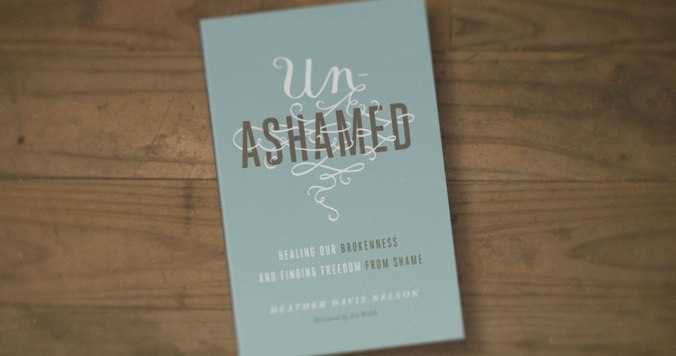
When Shame Haunts You

Below is the beginning of an article featured at The Gospel Coalition blog. TGC helped to launch my writing into a larger audience by facilitating my introduction to Crossway, publisher of Unashamed.  Below is the first part of  When Shame Haunts You

There was a time when shame didn’t exist. Man and woman walked freely with God and one another—perfectly vulnerable and without shame (Gen. 2:25). But then sin entered the paradisiacal landscape. And with sin came the immediate hiding of shame.

The man and woman tried to cover themselves from each other, and they hid from God when he came looking for them. As he exposed the sin, they blamed one another, then the serpent. Eden shattered, and they were expelled from paradise. But not without one seemingly small act of grace—God covered them with adequate clothing (Gen. 3:21). This act pictures the future, greater covering of shame humanity would need—clothing in robes of righteousness instead of the garments of sin that cloak us with shame.

Unclean Made Clean 

Throughout the history of a redeemed and rebellious people, we see shame alongside sin and guilt. Guilt was atoned for through regular sacrifices, pointing to the Lamb of God who would be the ultimate and final sacrificial offering for a sinful people. Shame often shows up in the realm of the “unclean,” a category in Levitical law that went beyond the uncleanness brought by sin. For example, a person with various types of skin disease could be deemed unclean by a priest (Lev. 13:1–59). There were shameful consequences for being pronounced unclean: “He shall remain unclean as long as he has the disease. . . . He shall live alone. His dwelling shall be outside the camp” (Lev. 13:46). What a picture of what those of us who dwell in shame feel—an aloneness and an exclusion from “the camp,” whether that camp be defined as our family, community, neighborhood, school, or church. Shame pronounces us “unclean,” and we’re separated and excluded. …

To read the rest of the article, visit TGC.org

Five Minute Friday: hidden

It’s been a good albeit long week of summer. We watched a summer movie ($1 at Regal), shopped for school shoes (already!), I had an interview on the Debbie Chavez show, we played at the pool a lot and did a lot of indoor activities trying to stay cool during a sweltering week. Today I take a break and return to the blog, joining in Five Minute Friday.

Five Minute Friday is my favorite of writing link-ups hosted by Kate Motaung. Her description draws me back every week, and the community of FMF keeps me writing – “This is meant to be a free write, which means: no editing, no over-thinking, no worrying about perfect grammar or punctuation. Just write.”

***

Hidden holds intrigue and promise, like a buried treasure waiting to be found. It’s a new life blooming within a mother’s womb. A long cherished love that awaits the right time to be expressed.

Hidden is also shame-tinged. It’s where I store my latest failure – bolted, safe, secure, for no one to see. If you’ve been abused, you know the burden of a hidden secret.

Hidden is good or bad, depending on what it is we are hiding and why. If it’s the latter – the long-buried secret – it needs the light for healing and freedom. Those sorts of burdens aren’t meant to stay hidden and borne alone. Speak about it with someone safe. Feel the burden begin to lighten.

If it’s the first – the type of hidden that’s like a treasure waiting to be found – I can think of no better analogy for what the Bible calls us children of God: “hidden with Christ in God.” We are God’s treasured ones, kept close and precious. Our glory is waiting to be revealed. 

***

Five Minute “Friday”: help

I love this weekly writing exercise/community, and I return after a few months’ absence. Because it’s always there waiting. And it’s *only* five minutes.

Five Minute Friday is my favorite of writing link-ups hosted by Kate Motaung. Her description draws me back every week, and the community of FMF keeps me writing – “This is meant to be a free write, which means: no editing, no over-thinking, no worrying about perfect grammar or punctuation. Just write.”

helpIt’s a word that can save a life. But I find it almost impossible to utter. It feels so, well, helpless. Who needs help in my self-sufficient world? I’m doing just fine, thank you.

Except when I’m not. Like tonight when one of my 5-year-olds defied me in front of her grandparents, and I messed it up. I was angry and frustrated and overwhelmed and out of my league. I was also ashamed for my daughter’s behavior in front of her grandparents and my response in front of them, too. Why couldn’t I just have said, “help, please”?

It’s a lie that as a parent I can do it all and be it all for my kids. But it’s a lie we all deceive ourselves into living by more often than not.

I wonder if this false stigma with the word “help” is what contributed to the tragic death in our church community of a mother and daughter two years ago today. Afterwards, we all expressed the sentiment – “If only she’d asked for help …” We all wished we could have jumped in. But how many of us would have been willing to ask for that help if we had been in her shoes? On my hardest, darkest day of parenting, it took all I had in me to finally, finally text my trusted friend and neighbor with the simplest of requests – “Will you help? I need a hug and I can’t deal with bedtime tonight.” She was over within minutes, and I felt simultaneously grateful and humbled. 

It’s the hardest, best thing in the world to ask for help. Because we know there’s One eager to help us when we ask. And He’s sent people into our lives who are as eager to assist us as we are to give them a hand when needed.

So do you need to ask for help? Don’t delay. Help is on its way.

***

If you find yourself to be entertaining thoughts or ideas of suicide in particular do not hesitate to ask for help. If you’re not sure where to turn, contact the crisis text line by texting “GO” to 741741 or call the suicide prevention hotline at 1-800-273-8255. 


scattered chaos – or a story?

A half dozen (or more) children’s books are scattered in piles of two or three around the perimeter of our living room. The one most recently read lays atop our ottoman beside a discarded ballet slipper. Its pink partner sits in front of my husband’s recliner. A pink polka-dotted blanket is on top of the rug, and a paper airline peeks out from underneath the couch. Blue sparkly Cinderella shoes and fuzzy pink slippers grace another corner, and the pink bin of Legos sits opposite. A plastic green cup with a straw sits proudly beside the remote controls. Cushions are all in tact at the end of this day – and that says something.

In my more frustrated moments, I’d say this is scattered chaos. I look around and feel annoyed that I didn’t ask my daughters to pick things up before they went to bed. I’m annoyed with myself for not picking up more before grabbing my laptop to write a long overdue blog post. But then I try to remember how this mess tells a story of a full day well enjoyed by two five-year-old girls. The books are from reading time at the end of the day, me in one chair with one twin and my husband in another chair with her sister. Before this there were dance parties (hence the ballet slippers and Cinderella shoes) and a yoga session (note the blanket on the floor as makeshift mat). One twin adores her slippers and hates cold feet, so she wore them downstairs until the day’s play began. Another girl was thirsty before bedtime and so she brought in her ice water with a straw while being read stories.

In ten years, the mess will look very different.

In twenty years, we’ll miss the days that left behind such a scattered chaos.

I wish – I pray – that I would have the long view as I parent during what feels like a long summer in the midst of a long season of gloriously imaginative play and charming smiles punctuated by sibling conflict and mommy frustration.

My word of 2016 has been “rooted.” I haven’t written about it here before because, well, the book has taken a lot of air time. But it’s because of the book’s publication that I chose this word as a focus and prayer for this year. It can be too easy to get lost “in the clouds” of a book release, becoming a published author, engaging in speaking events I’d only dreamed of before – and forgetting my roots. The lovely, hard, sanctifying thing about motherhood and marriage is that my family roots me and grounds me in reality. There is laundry, and the dishes pile up when neglected, and meals need to be cooked and planned, and these ones I love are always present. Loving me and counting on me for their rootedness.

This task feels too immense. And it is until I remember where I am rooted. Deep in the eternal love of God, secured for me by Jesus Christ, spoken into my heart and soul by the Spirit. To be rooted in him, all I need to do is rest and abide and remember. Reading the Bible and praying and worshiping in our local church community help immensely. roots

The truth is that as I look around my living room this evening, the scattered chaos and the story it tells reminds me where I am rooted. Physically and emotionally – here with my family at a house in Virginia amidst a neighborhood and community of friends. Spiritually – I am rooted in a story that often looks to human eyes like the scattered chaos of this room. But it is telling a bigger story of redemption and hope and joy as the life of God is known through my work and play and parenting and marriage and friendship.


Book launch day & a sneak preview

unashamed - long.jpg

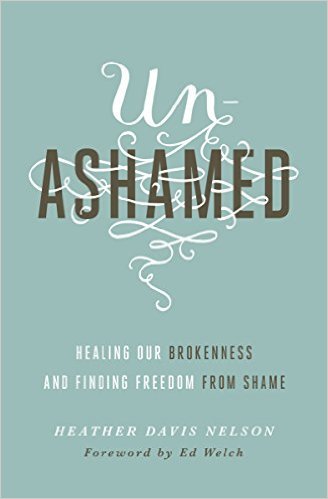
Y’all – it’s here. Today is the day that my first book officially launches into the world! I hope you’ll order a copy or two. Even more, I hope that you’ll discuss this with your community, whether that’s a best friend or a small group or your spouse or a roommate. Why? I want this book to be part of a movement in our communities towards gospel-fueled authenticity and away from the shadows of shame that keep us enchained. I want freedom. Healing. Transformation. Joy.

And so I’m giving you a sneak preview to you who are my faithful blog-followers – a section from the introduction and the conclusion. These best capture my heart for Unashamed and my prayer for its readers.

“I have always been terrified of public speaking. I can trace it back to eighth-grade graduation, when I froze on stage in front of my classmates and an audience of hundreds. Standing in front of the mic unable to utter a word, the expectant and anxious waiting, and an uncomfortable and heavy silence — these are what I fear anytime I am about to take the podium. The fear of being publicly embarrassed, of my weakness being unmasked in front of an audience who sees each excruciating moment, is one manifestation of shame in my life. At its core, shame is fear of weakness, failure, or unworthiness being unveiled for all to see, or fear that at least one other person will notice that which we want to hide. Shame is like a chameleon, easily blending into the surrounding environment so that it can’t be directly seen.

Shame commonly masquerades as embarrassment, or the nagging sense of ‘not quite good enough.’ It shows up when you attempt a new venture, or when you’re unsure of your place in a group. Unchecked, it can become an impenetrable barrier between you and others. It is not a topic of conversation at a party, although it is an unwelcome guest in every gathering. You may not know if you suffer under shame, because too often it’s been categorized as guilt (which is its close cousin). It is not the exclusive domain of victims of abuse, yet shame is found in every story of suffering at the hands of another. Shame can linger when you have sinned against another in ways that feel unforgiveable. Shame is complicated.”

From the conclusion:

“We know that there will be no more mourning or tears or death in the life to come. We look back to Eden to see that there was no shame before sin. Unashamed. It’s where we began, and it’s our destiny as the redeemed ones in Christ. The Christian’s ultimate hope for shame is that we will be clothed in the honor of Jesus Christ when we stand before God in all his glory. Shame will be eradicated forever. No more hiding. No more past to haunt us — either that of our own sin or that of sin done against us. Shame will be thrown to the depths of hell where it belongs with the great Accuser of our souls. It will be like emerging from a grim black-and-white film to a vivid and bright happy ending – an ending without end, that stretches into forever.

“This book is a fruit of my own journey away from shame into the freedom of being clothed in Christ’s beauty. I am a people-pleaser by nature and practice, and writing publicly terrifies me because of the fear of criticism and judgment. I want my words to be beautiful and perfect. And yet — like every other part of my life — they won’t be and they cannot be. It is in offering my imperfect thoughts that I am practicing my freedom. It is in offering some of my failures and imperfect portions of my story that I hope to encourage you to do the same. Above all else, it is my unshakeable hope in the power of Jesus Christ to heal shame at its source that emboldens me to risk. For if you begin to taste the freedom of the unashamed in even one relationship, it becomes a seed that can transform your community. We need more neighborhoods, churches, homes, and workplaces where we live unashamed and give others space to live unashamed as well. Let’s be part of the movement away from shame into freedom, honor, and glory.”

Join me? You can order Unashamed here. Or look for it in your local bookstore. I’d love to hear from you once you read it. Thanks for celebrating with me today!

unashamed-quote04


stories of shame, part 5: burnout & performance shame

This is part 5 of a 10-part series entitled, “stories of shame.” Read the rest here.

burnoutMinistry burnout (definition): when the lie of my indispensability has mixed with the practice of neglecting rest and the reality of a heavier-than-usual season of ministry burdens, resulting in emotional/spiritual/physical fatigue that necessitates an extreme break.

Have you been there? So many of us who are in ministry either full-time or part-time (is there such a thing as part-time ministry?), and/or are married to someone whose vocation is full-time ministry face burnout at some point and to various degrees. In my upcoming book on shame, I address the connection between burnout and performance shame.

Performance shame (definition): the belief that I am acceptable to the degree to which I am successful in life, work, and/or home

Add in performance shame with a vocational calling to ministry, and you can get some dangerous beliefs that you’re acceptance to God depends on the quality and quantity of your ministry to God’s people. Believe me, I know. I’ve been there. Two times, and most recently last fall. As a girl who grew up doing pretty well in school and towing the line at home and in church, I received a lot of recognition for my success. This isn’t inherently bad, of course, but unfortunately my heart bent on earning love and acceptance twisted this into an unhealthy algorithm that love = perfect performance.

Fast forward to adult life in my early 30s: I’m a pastor’s wife, counselor in our church, mom to twin daughters, leader/teacher in a few different ministry areas of our church. And when I felt like I needed a break, my impulse was to push that away and just keep on going. The needs of others always seemed more pressing than my own. And honestly, it was more rewarding to meet another’s need than to tend to my own needs of rest. Being able to rescue a friend in crisis earned instant approval, while I’d have to fight my own self-criticism (and possibly that of others) if I stepped down from ministry positions or took a break for a season. Not all of this is bad. I believe God’s gifted me to be calm and clear-headed in crises. I thrive in these places, and I enjoy being able to help – not merely for selfish reasons of feeling “approved” but out of a sense of doing what I was created to do and providing a real service to others.

The problem is that crises began to stack one on top of the other and were coming at me from many different directions: work, home, church, and friends. And I went into my default mode of showing up to be what was needed in the moment rather than stopping to take a break, ask for help, rest and tend to my own need for refreshment. I’ve learned/am learning the hard way that while you can’t ever prepare for a crisis – and crises are inevitable in life and ministry – you can recover from a crisis. And you must clear your schedule after an intense season of ministry in order to be able to continue to serve others well – and to disentangle the voices of others/self from the voice of Jesus. Jesus’ invitation is to come and rest, to abide in his love, and from there to go out and serve. The way my performance shame twists the voices of others is into a message of, “Meet my needs first, and then you can rest.”

How did I get recover from burnout and at the same time fight to be free of performance shame? I stopped and took a break.

Yes, it’s that simple and that hard. In January, I began a sabbatical from my counseling practice that isn’t over yet. In February, my husband took a 3-month sabbatical from his position as associate pastor at our church (thank you to our church who builds in a sabbatical for every 7 years of ministry). While he returned from his sabbatical a couple months ago, I am still taking a break from formal positions/places of ministry and service at our church. And to be honest, it feels a bit strange. I’m a little bored. But I’m committed to wait on the Lord for what’s next and when it’s time to jump back in – and how. In the meantime, I’m immersing myself in the message of freedom and healing from performance shame that’s found as I look at and rest in Jesus’ perfect performance on my behalf. The gospel of John is a great place to start, by the way. And writing a book on shame has opened doors for me to talk to many others about the freedom I’m experiencing and fighting for – the freedom found by resting in daily sufficient grace.
Unashamed w: Welch

What about you? What’s helped you recover from burnout? Or what’s helped prevent you from reaching burnout? Join the conversation by leaving a comment.


10 things you should know about shame

1. Shame is different from guilt.

Ed Welch, a professor and the author of Shame Interrupted, first alerted me to the difference between shame and guilt. Guilt’s message is, “I did something bad,” and needs justification and forgiveness. Shame’s message is, “I am bad,” and needs an identity shift and relational connection. Sin leaves both in its wake, and shame is what lingers even after forgiveness has been sought and granted. Shame feels like it’s welded onto you, but guilt feels like something outside of you.

2. Shame can arise from others’ sin against us.

Shame is commonly found in victims of abuse. Shameful and sinful acts committed against a person leave one more vulnerable to shame. It’s not uncommon for the victim of sexual assault to feel more shame than the perpetrator.

A poignant biblical example is in the story of Tamar who was raped by her brother, Amnon, who then expelled her and said he wanted nothing to do with her. She walks away mourning, cloaked in shame. 2 Samuel describes her exit: “And she laid her hand on her head and went away, crying aloud as she went” (2 Sam. 13:19).

3. Shame can arise from a past sin that haunts us.

Do you believe that your worst sin has been separated from who you are as far as the east is from the west? For those who take refuge in Christ, this is the truth about even your most shameful sin—it is no longer a part of you. Other people may remember, and you may remember, but to the one whose remembrance counts for eternity, your sin is nailed to the cross and no longer has power over you.

4. Shame can feel like a vague sense of unworthiness and insecurity that isn’t immediately rooted in either past or present sin.

Shame can be another term for unbelief in God’s love for you in Christ. It’s one thing to believe that your sin has been removed from you; it’s quite another to believe that there is a divine love that can never be removed from you.

Shame acts like a barrier that keeps love from getting through—either God’s love or anyone else’s love. It sounds like the recurring doubt, “That may be true for others, but it’s not true for me.”

5. We try to get rid of shame by passing it to others; instead, it multiplies.

The generational and cyclical nature of shame makes us want to pass our own sense of shame along to those around us as we blame them and/or shame them. The mother who feels ashamed of her own body criticizes her daughter’s eating and clothing choices, thus passing along a sense of body shame to her.

To read the rest of the article, click here to head to Crossway’s blog: 10 Things You Should Know About Shame

And P.S. – have you signed up for “Refresh,” Crossway’s 14-day summer devotional? It starts tomorrow – 14 days of gospel reflections delivered to your inbox. 

stories of shame, part 4: Jesus meets the ashamed

As my first book, Unashamed, prepares to launch June 30, I’m writing a 10-part series on shame. All of them can be found by clicking here.

What does Jesus do with shame? I can tell you my story of struggling with shame (and I’ll continue to do so throughout this series), and this may provide you with some sense of connection as you feel less alone. That’s invaluable. But you need more than empathy and connection. You want healing, right?

And for that you’ll need to encounter someone powerful enough to take away your shame. To exchange it for honor – to call you “worthy.” Jesus may be the last person who comes to mind when you think about healing shame. But these stories give you a picture of why he is the only one – and the first one – to turn to when ashamed. It’s a creative retelling of three accounts in Scripture of Jesus’ encounter with those filled with shame, in this case all three women.

Story 1 (from Matthew 26:6-10):

I saw Jesus – glimpsed him entering the home of one of the religious leaders, Simon. Simon and his cronies never look my way. They must be afraid that simply acknowledging me will make them dirty and unclean. I am a prostitute, and cloaked in shame. But Jesus – he is different. He is not afraid to look me in the eyes. He forgives women like me. It’s the talk of the town. And so tonight – I am going. I am braving the scorn and the disgrace that may await me, and I am going to Jesus.

I entered the home and began weeping at his feet. I broke my alabaster jar of perfume – rather costly – a year’s wages – and anointed his head and feet. I wiped his feet with my hair. They’re all staring at me – Simon and his friends, Jesus’ disciples. But Jesus won’t turn me away. And so I stay.

Then they begin talking. It starts with the quiet whispering as they look in my direction. Then one of them says, “Do you know who she is?” And another adds, “What a waste! She could have sold the perfume and helped the poor with it!” Their arrogance looks “good.” I tremble inside and out. The shame – it’s taking over. I shouldn’t have come. Who did I think I was? Was Jesus worth this disgrace?

And then it happens. He stands up for me. He speaks up on my behalf. He defends me. And – I can hardly believe it – he shames Simon for his lack of hospitality! He says I’ve washed his feet (which Simon failed to do), that I’ve anointed his head (also forgotten by Simon) – and he says that what I’ve done is beautiful.

They are quiet. And my heart is full. I am free and unashamed, for Jesus set me free.

Story 2 (from John 8:3-11):

They caught me with him. And while he got away, I am now here, encircled by those who are backed with the law of God – with the right to stone me to death. It’s the end. I should have known it would come to this. I feel such disgrace – such shame – to be here, to end my life like this, surrounded by their disdainful looks and critical words.

But then he comes. Jesus is his name. And he stands by me – by me – and he says, “what has she done?” And then he says, “He who is without sin can cast the first stone.”

And I wait. And I watch with wonder as they leave, one by one, the older ones first.

I’ve never been treated like this. My shame? It’s beginning to fade away. He turns to me and forgives me, saying, “Go and sin no more.”

I walk away with my head held high and my shoulders back for perhaps the first time in my life. I am free and unashamed.

Story 3 (from John 4:6-30):

I’ve been married a lot. Five times, to be exact. The other women despise me. I can’t bear to pass them when gathering water at the well, so I go when I’m assured to be alone. In the heat of the middle of the day. Then I can get the water I need and go my way without contending with their shaming words and looks.

But today was different. There was a Jewish man there. And he talked to me. That’s not done. Ever. I’m a woman. And I’m a Samaritan. But he talked to me. And I didn’t like the direction he was going in – seemed to be trying to circle in to what I was trying to hide – and so I deflected. Began talking to him about his living water, about where to worship, anything to change the subject from me and the shame I’m living with daily.

Jesus persisted. He called me on my source of deepest shame (all my marriages) – and he pointed out my multiple marriages not for the purpose of condemning me, as everyone else does, but in order to let me know I’m loved for who I am. And to offer forgiveness.

So I am telling everyone about him, the one who told me everything I ever did, and then loved the shame right out of me.

I am free and unashamed.

stories of shame, part 3: postpartum body shame

As a woman writing about shame, I can’t get too far into this series without discussing body shame, which I define as follows:

“Body shame is the feeling that your body with its imperfections is something of which to be ashamed – something you wish you could hide or change.” – from “Clothed in Christ: Body Shame” in Unashamed: Healing our Brokenness and Finding Freedom from Shame

I will say that compared to the “typical woman,” I managed to dodge the body shame bullet for a long time. I attribute this to growing up with brothers, where the focus at meals was about how much you ate instead of competing for how little you ate. I also come from pretty awesome genetics that I can take no credit for – high metabolism – and a generation of women who loved their desserts (and it didn’t show #unfairIknow). My dad did nothing but praise my appearance, giving me an inward confidence that was such a gift during adolescence particularly. My mom was free of the dieting cycles many of my and her friends tried throughout the years. The result = a ton of resilience against body shame.

Until I got pregnant, gained a lot of weight with twins, and hit the awkward postpartum months/years when, yes, I’ve had people ask me if I’m pregnant because that’s what it looked like. Weight doesn’t come off so easily when you’re in your 30s. End result = first real personal struggle with body shame.

mirror

So what have I done? What do I do? I preach the gospel to myself. The gospel as applied to body shame is that I am redeemed from my deepest flaw (sin within), and that Christ has made me beautiful. The beauty that counts is within, and my struggle with my outward appearance is either increasing inward beauty or decreasing it.

  • Do I obsess to the point of self-centered focus?
  • Do I spend more time measuring myself by dress size and the number on my scale than by the truth that I am hidden with Christ in God?
  • Do I judge my worth by how snugly my clothes fit compared to a few years ago?
  • Do I look at the mirror on my wall more than the mirror of God’s Word?

The truth is that right now, this struggle is nearly daily. But I know freedom is possible, and I have tasted it in glimpses. What I pray is that more and more, I will be more focused on loving others than on how I appear or what I don’t like about my body. I pray that I will be more and more radiant with the beauty that comes from being with Jesus instead of becoming obsessed with wearing the right clothes, makeup, and being my “ideal size.”

I want to see myself as God sees me, not as the message given to me by the culture, the mirror or the scale.  And God calls me beloved and beautiful, because I am clothed in his Beloved Son, Jesus, by faith.

***

You can read the other post of this series here: part 1 & part 2.


when May reminds you of what you’re missing

strawberries
May is usually pictured as cheerful. Kids running through fields of wildflowers, or picking strawberries with red juice staining white frocks. The world coming awake from its wintry hibernation. It is happy. It’s spring. The earth is blooming. 

But what about when you feel at odds with the world outside? Like the inevitable good-byes that come when you live in a military community. Like remembering the bittersweet end of each school year – mostly sweet, because the long, lovely days of summer were ahead; but a bit bitter, too, when it meant change was around the corner. I remember the year I graduated from the only school I’d known because I’d be attending high school the next fall. I can recall the joyous grief when I graduated from high school, as we all were about to scatter to our next stages of life. And college graduation was probably the most distinct. Those four years were a sweet, sweet season of my life that I wept at leaving behind. The drive back to South Carolina from Chicago that May was a trail of tears … mine as I kept wanting to look in the rearview and remember the good times, as if that might help them to last forever.

So I think it’s normal (I tell myself) that each May I feel a mixture of all of the Mays I’ve lived. The excitement, the anticipation, the anxiety, the regret, the sad farewells to friends and seasons. And I can’t help but remember the May two years ago when friends lost their 17-year-old son to tragedy. In meeting with this friend a few weeks ago, she talked about the way that May seems to drag on forever some years (like this one).

If you have felt the May blues in whatever degree, take heart. You’re not alone. Change, well, it’s unsettling at any stage of life. This May our across-the-street beloved neighbors moved. They were the kind of friends you felt truly #blessed to have as neighbors. My husband and I enjoyed the company of the parents as much as our kids loved playing together. We left for vacation for a week and when we came back, they’d moved already. We knew it was coming, but after the fact … it feels like something is missing. Life on our street doesn’t feel the same.

And I’ll be honest. As a mom of twin 5-year-olds, summer feels rather daunting. I want to be the mom who enjoys the extra free time at home with her children (and some days I do), but I too often feel like the mom who gets tired of being camp director/chef/cleaning boss/chief disciplinarian. Times 100 in the summer because of all.those.hours. Every day. And so.much.heat. And no.more.naps. I don’t want to default to PBS kids’ marathons Mon-Fri because “mama just can’t take it anymore.” So while the finish line of preschool edges ever so close these next few weeks, I am trying to remember the “sweet” part of “bittersweet May” and to remind myself that these days with these 5-year-olds will one day be a wistful glance in the rearview of my life. 

wildflowers