devotionals worth reading in 2015

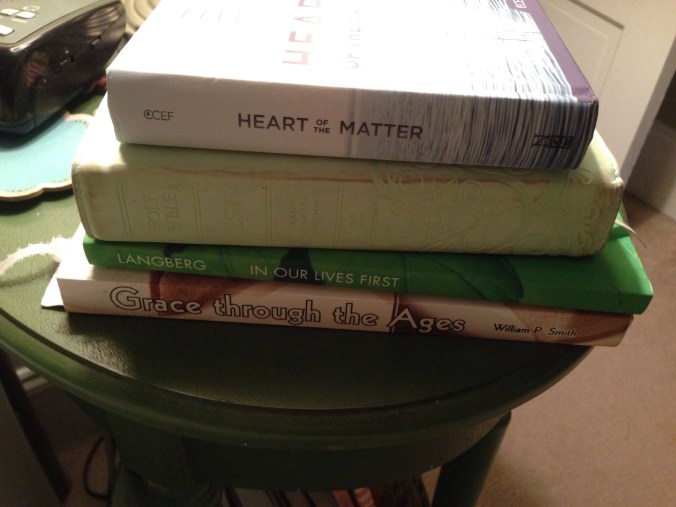
/home/wpcom/public_html/wp-content/blogs.dir/1bc/1176043/files/2014/12/img_7639.jpgAs this year draws to a close, I am preparing a list of my top 10 books of 2014 (drumroll, please?), as I did at the end of 2013. In the meantime, I wanted to offer you a few recommendations if you are looking for a devotional reading for 2015. What I’m referring to is a resource written to help you understand the Bible and the Christian life, giving you daily encouragement for your journey of faith. I have found a good devotional and a daily Bible reading plan to be essential to nurture my faith. It provides a space for me to bring my questions, doubts, joys, and sorrows; and I know that I am heard by God and through the Bible, God speaks to my heart. Some favorite words on the value of daily time spent in prayer and study of God’s Word from spiritual director and author, Henri Nouwen:

“When we are securely rooted in personal intimacy with the source of life, it will be possible to remain flexible without being relativistic, convinced without being rigid, willing to confront without being offensive, gentle and forgiving without being soft, and true witnesses without being manipulative. … solitude begins with a time and a place for God, and God alone. If we really believe not only that God exists but also that God is actively present in our lives– healing, teaching and guiding– we need to set aside a time and space to give God our undivided attention. (Matt 6:6) … We enter into solitude first of all to meet our Lord and to be with Him and Him alone. Only in the context of grace can we face our sin; only in the place of healing do we dare to show our wounds; only with a single-minded attention to Christ can we give up our clinging fears and face our own true nature. Solitude is a place where Christ remodels us in his own image and frees us from the victimizing compulsions of the world.”

365-day devotionals (note: it usually takes me way more than one year to get through one of these!) –

  • Grace Through the Ages by William P. Smith – I’ve written about this one in the past. It’s incredibly rich, and it’s written by a friend and former counseling colleague and supervisor. I love the way Bill discusses grace, and the way he shows how grace is on every page of Scripture.
  • Heart of the Matter by CCEF – I am planning to read through this one in 2015. I’ve read excerpts here and there. It’s a compilation of writings by biblical counselors who seek to connect God’s Word to the heart.

Topical devotionals –

  • For moms – best one is Jen Hatmaker’s Out of the Spin Cycle. Witty, encouraging, practical, and short. Blessedly short.
  • For counselors/pastors/other helping professionals – In Our Lives First by Diane Langberg. Soul-refreshment that helps carry you in the burdens and dangers of  being on the “front lines” of caring for others.

Yearly Bible reading plans –

  1. A reading from Old Testament, New Testament, and Poetry for each day (you print out the three bookmarks for each section of your Bible – PDF here.)
  2. Chronological Bible Reading Plan – read the Bible in the order in which it was written. I did this last year with my friend Kiran. We both said the downside of this plan is that you don’t reach the New Testament until October though!!
  3. Read Me Bible Plan – similar to #1 above, but without the Poetry section.
  4. Customizable plan here – choose whether to do chronological, historical, or another assortment, and select whether to start on the 1st or the 15th of the month.
  5. 5x5x5 plan – 5 minutes a day, 5 days a week, with 5 suggested questions. It takes you through the entire New Testament in a year. I think I’m going to go through this plan for 2015 since I tend to fall behind a traditional (long) reading plan fairly quickly, and then the perfectionist/performance-oriented part of me feels guilty. When the main point is to spend time reading the Bible regularly so that I can soak in God’s love for me and be equipped to pour out his love to others. If a plan helps you do this, great! If not, find something else. I offer these merely as suggestions and guides.

*note: some affiliate links included (for the books – if you click on them and order them through Amazon, I’ll get a very, very small percentage of your order from Amazon)

A Father’s Reflections on Discipline (guest post from my brother, Dr. Jonathan Davis)

image from soulcare.org

image from soulcare.org

Featuring guest posts on my blog this year is a wonderful way for me to take some time off AND to feature a couple writers that I think you would enjoy. The first one by my daughter Lucia on Christmas Eve was a big hit. This second one is authored by one of my two younger brothers, Jonathan. In family gatherings this week, I was reminded again of how much I love both of my brothers and their wives for their laughter, deep faith, and genuine love for others. Jonathan’s heartfelt words on parenting are so needed at this time of year as my kids crash after being over-sugared and over-gifted at Christmas. I saw he and his wife live these words in many small moments with their three children (now ages 5, 3, and 1) over the past few days of celebrating Christmas together. Without further ado, I introduce to you my brother Dr. Jonathan Davis, who recently finished medical school and now is in practice at a medical clinic for the underserved using his training in MED/PEDs (internal medicine/pediatrics)

 A father’s reflections on discipline (originally written early spring 2014)

In spending much more of my time this past month in our home, I have had the amazing privilege of being more involved with our children. Living at a slower pace of life, I have greatly enjoyed being able to spend more time reflecting on my relationship with my God, my children, and my wife. Since my wife and I are currently in what we like to call a fairly “discipline heavy” stage of our parenting careers (3 kids under the age of 4), much of my reflection has involved the topic of discipline. Here are a few of my thoughts.

on the benefits of consistent discipline:

I see how it is often such a delight to play with my 4-year-old now and how our relationship can be so open, honest, respectful, loving, and deep. And much of this, I think, is possible precisely because we disciplined him diligently as a younger child, and he now enjoys the benefits of having a fundamental respect for authority in his life—namely his parents. I have worried that discipline may result in children that are tense, anxious, lacking in confidence, or simply don’t want to be around me. Yet what I am coming to realize is that precisely the opposite is true. Of course, I am not speaking of discipline done in an abusive way; however, when done in a controlled, consistent fashion by parents who love their children, discipline opens the door wide for the deepest joys of a parent-child relationship later in life. Effective discipline helps clear away the disrespect, anger, and rebellion that are the biggest barriers to a healthy relationship between parents and their children. So take heart! Yes, it is hard to consistently (and repeatedly) discipline my two-year-old, but how powerfully will this loving discipline help to guide him into the path of God’s blessing in his life! This is what I want for my children—I am happy to take on my often difficult, but God-given responsibility to discipline my children because I know this is God’s way, and leads to His blessing.

on authority:

I teach my children to live under authority not because I am power-hungry and must have obedient ‘subjects’, but because I know that as the adults they are becoming, they will always have to live under authority—ultimately I pray under God’s authority, but certainly under the authority of a boss, policeman, or simply laws of the land in which they live.

on reactionary parenting v. downstream parenting:

In reading Raising Resilient Children and another book I’ve recently been studying entitled The Effective Father, I have been thinking on this idea of “reactionary parenting” vs. “downstream parenting.” Reactionary parenting, which all of us as parents are most tempted to do, involves responding or “reacting” in the moment only. For example, my four-year-old often cries in frustration when he works on Legos by himself, and I typically rush in to help him so that he feels better. This is reactionary. I hear his cry, see the situation, and provide the remedy—helping my son myself. Certainly this approach has its merits, but I would argue I am missing significant parenting opportunities if I approach parenting situations in this way only. Consider the “downstream parenting approach:” I hear my son crying again while playing with a new Lego set. I don’t ignore him, but rather than immediately intervening I squat down beside him and say something like this, “Son, I know this is hard for you isn’t it? Most of these Lego sets have gone together pretty quickly for you, but this one is pretty tough. You know, I often face things that are hard for me to do, too. I think that often the best way to learn is to calm down, relax and stick with it for a while. So I’m going to leave you alone again for a bit and let you try this. I’ll set the timer for 10 minutes and then come back and check on you. If you’re still having trouble and would like some help, I’d be glad to jump in there with you.”

In the first approach (reactionary), I am providing loving support and help for my son. He feels loved by me, possibly trusts me more. But I have neglected to teach him any skills for handling this or similar problems in the future--or ultimately when I am not around. In the second approach (downstream), however, I would be pushing my son to develop patience, endurance, or “resilience” (and I don’t think he would feel any less love or support). It is probably easier and quicker to fix the Legos myself, but my son will be better able to face the next bigger challenge next week, next year, or in 10 years if I consistently parent in this way, looking “downstream” for the challenges that I know he will face in the coming years.

on the time commitment required to effectively parent:

I have also begun to realize how much time effective parenting requires. In the examples above for instance, “downstream parenting” probably takes more time and effort, yet those efforts are more apt to “pay off” in the long run. If I am busily scurrying through my day that is filled with work, school, after-school activities, T.V. shows, etc., then I will not have time for consistent, in-depth parenting encounters with my children. It is worth it to simplify and free up “margins” in my life for my children. I will reap the harvest in years to come.

on my own legacy as a parent:

As I think about my parenting and discipline for my children I wonder what legacy, what lasting impressions I will leave in their minds. Will they remember me as a moralist, a strict and authoritative disciplinarian? Or will they ultimately come away with a deep sense of how much I loved them? Even as I pose these questions to myself, I realize that I am setting up a dichotomy that I’m not sure exists. Is authoritative parenting and frequent discipline incompatible with love? I actually think these do not have to be incompatible. If I am authoritative in my parenting style and committed to regular, consistent discipline of my children when needed (even if one or more children has a temperament that results in frequent discipline), the matter of utmost importance remains the manner in which I carry out that discipline. If my discipline were harsh, mechanical, or angry, then concern for the ill-effects of its frequent application would seem justified. Or likewise, if I disciplined out of irritation or annoyance with problem behavior the same would be true. But what if I see discipline as “rescue” and “restoration”? What if my discipline is thoughtful, filled with calm, purposeful discussion, and physical displays which affirm my love and affection? In this case, I would argue that the child who receives more of this kind of parental interaction would indeed know my love more deeply.

I see this reflected in my own relationship with God. As I go through trying circumstances when I know his hand of discipline is heavy upon me, I feel pain and discomfort in the moment, yet nothing can compare with the simultaneous displays of his intimate love and provision of strength for me. I reach the end of such “disciplining” times from His hand and find my walk with Him much deeper and my love more fervent. If God, as my loving heavenly Father, deals in this way with me, should I not strive to emulate His ways as I love and parent my own children?

***

EDITORIAL NOTE by Heather: Discipline is a loaded topic, and what Jonathan calls “discipline” here is not referring to nor condoning any type of so-called “discipline” done in a heavy-handed way at the expense of children. It excludes any such action which misuses a parent’s position of authority/power for the ill of the child. This is nothing less than child abuse, defined as: “when a parent or caregiver, whether through action or failing to act, causes injury, death, emotional harm or risk of serious harm to a child. There are many forms of child maltreatment, including neglect, physical abuse, sexual abuse, exploitation, and emotional abuse.” If you wonder whether you’re being abusive in your “discipline,” stop immediately and seek professional help. See this website for more information and for further resources: childhelp.org

a guest writer and favorite Christmas posts

merry christmasDespite the sorrow and grief you’re carrying, there is reason for hope and even joy this Christmas.  Joy not as the happy-paste-on-a-smile type, but joy as what anchors your soul amidst the storms of life. Joy that tells you it will not always be so hard, and that there is a shore to which we are sailing. Sometimes it’s discovered in the small grace-glimpses. Like a retelling of the Christmas story by my 4-year-old daughter, Lucia. And so this becomes her first featured post – and a gift to each of you, that you may pause for a moment and savor the Savior whose birth is making all things new. (And oh, how we need that in a broken world of grief-weary hearts!)

Mary and Joseph walked to Bethlehem ‘cuz there were no cars or busses in their time.  They were tired!  They wanted a bed to sleep in. They went to the inn.  “We want to have a bed”.  The innkeeper said there was no room.  He said they could sleep in the barn. That night Baby Jesus was born. The shepherds got scared ‘cuz the angels came. “Don’t be afraid ‘cuz Baby Jesus is born in Bethlehem!  Go to the stable to find him”. They ran to the stable.  They went in quietly, ‘cuz Jesus was sleeping in Bethlehem.

Other Christmas posts worth perusing:

So I’ll end by saying – Merry Christmas, y’all! And to all a good night …

Letter to Grief

All is not calm and bright, is it? This time of year is more often chaotic and dark as we scurry around with our never-ending Christmas to-do lists, flitting from one festivity to another. And for many of my close friends, this Advent season brings unimaginable grief. I feel it with you. And so I jumped at the opportunity to join in a “Letters to Grief” event hosted by Kate Motaung coinciding with the launch of her book by the same name. This letter – it’s for you, my friends grieving loss this season. Whether that loss is of a parent or a child or a pregnancy or a job or a clean bill of health or a dream or a marriage – the loss of hope and community too often follows in its wake. Let this be a small reminder that no, you are not alone, and yes, it feels excruciating. Cry, and sorrow, for we are not Home yet. But grieve with hope, for Home is being prepared for all those clinging to the hope of our Redeemer Jesus Christ.

***

photo from terragalleria.com

photo from terragalleria.com

Dear Grief,

You have claimed many friends in 2014, and I have been touched by you as well. The worst part is that the church has too often refused to own you as she should. She has proclaimed a gospel of health and wealth instead of the message of the Man of Sorrows acquainted with grief who promised suffering for all who take up their cross to follow Him. And in those moments when the people of God feel like they have no refuge, you cackle and seem to win. You whisper lies, saying that there is no hope, and that God is as distant as the well-meaning friends who disappear after an initial rally of support.

I saw you tragically enter stage left on a late night in May when the Rodriguez family lost their 17-year-old son and brother, and the Jones family lost their police-officer-husband and young father to a madman’s random fire on the streets of Norfolk, Virginia.

You descended like a sudden summer thunderstorm on an otherwise ordinary Wednesday afternoon when a desperate mother decided to end her life and that of her 8-year-old daughter, leaving our entire church community gasping for breath as we suffered under your shadow. You came in waves of tears to the surviving father/husband and daughter/sister, and I know they still feel your touch.

You linger in Manayunk, a suburb of Philadelphia, haunting the friends and family of Shane Montgomery, a college student missing since Thanksgiving Eve. They do not quite know whether to succumb fully to you or to try to resist in hope against hope that there could be good news after so long.

You have been the unwelcome Advent guest to a close friend and her family as the sudden heart-attack death of her beloved mother sinks in alongside the Christmas carols and festivities.

Your problem is that you cannot be predicted nor defined. You come as a unique visitor to each of us, rarely on time and often in disguise. You hide yourself in many forms, putting on a mask of anger to make us feel strong instead of weak. Sometimes you sink deeply into the soul, bringing depression and despair that seems impossible to escape. If left unchecked, you can cause me to live entirely on the surface of life in order not to look within and acknowledge your presence there.

Jesus Christ knows you better than any of us. He is “the man of sorrows, well acquainted with grief.” (Isaiah 53:3) He bore the weight of what grieves God on the cross and conquered it fully in His resurrection. He took away the sting of death – sin – saying that you, Grief, no longer have the last word. Hope takes away your bitterness, leaving us a cleansing sorrow in its wake. Hope allows us to acknowledge you without surrendering fully to you. Hope frees us to look you in the eyes as you enter our hearts and communities, and to weep freely with those who sorrow. We the Redeemed can meet you without despair; acknowledge you without empty clichés; join with others who dwell in your shadow without demanding answers or reasons.

So come, dear grief, teach us to sorrow well because of the hope of a risen Savior who will make all things new and eradicate your presence from our broken world entirely when He returns again. You will not own us, though you may visit us more frequently than we would choose. We will not turn away from your presence in our own lives or those of our friends and family. And thus we strip you of your power to isolate, turning your presence into a sign of longing and an invitation to draw nearer to those suffering in your wake.

five minute “Friday”: adore

photo from shutterstock.com

photo from shutterstock.com

“O come let us adore Him …” rings the Christmas carol from the most unlikely places. Radio, department stores, Target. Everywhere I go, there are invitations to adore the newborn King.

But how do you adore when your heart is broken in two by grief? When you’ve lost your mom from a heart attack, when your missing friend still hasn’t been discovered, when you worry about an upcoming biopsy? How do you adore in the middle of heart-rending grief? When this is the first Christmas without your mom and your sister? Or your son or your brother or your father?

How can I adore when I’m caught up in all the tasks of the season? The parties, and the gift-buying, and the Christmas-cookie-making, and the making-sure-no-one-is-left-off-the-list?

Jesus. He invites me to adore him, and then he does the miraculous. He comes near so that I can. He interrupts my over-scheduled insanity with a bout of illness, and I’m forced to practice the white space I’ve been proclaiming. He comforts my friends in the middle of their deep grief. He leaves perfection to come to a quiet, dark, hay-filled manger – born amidst poverty. Our newborn King. He brings Christmas in a way none of us would ever have planned. And to think of this? There is no option but to adore him.

***

Writing for five minutes on a given prompt, unedited. A favorite link-up with a fabulous community of writers, hosted by Kate Motaung here.

last minute gift ideas for 4-year-old girls

If you’re like me, you might – just might – still have a few items left on your Christmas list. And if you’re looking for good gifts for the 4-year-old girl(s) in your life, I thought I would share some of our favorites. These are a few of my twins’ favorite toys they own. Guaranteed smiles for the little ladies in your life.

Slide1

Here are 7 of our favorite gifts (and let me be clear – there wasn’t a single gift they opened that they didn’t like) – in case you need ideas for your own special 4-year-old or a niece or friend:

1 – Frozen Elsa and Anna dolls. Of course. What I love about this set is that you get both of them in one package for a much more affordable price. (Right now $49 for both at Amazon.)

2 – Enchanted Princess Cupcake game. They love putting these cupcakes together and pulling them apart and pretending to have a tea party with them.

3 – Hello Kitty (anything) but particularly their Hello Kitty notebook and pen. They enjoy “writing” while sitting in bed. (I think they’ve seen me do this a *few* times?!)

4 – Lego Juniors princess edition. Seth and I love all things Lego since we both had hours of enjoyment as kids with our Lego sets. How great that this is a simpler version of the “real” Legos! We have had the Duplo-type Legos, and this seems to be a nice bridge to the “real thing.”

5 – Mermaid Factory sculpture kit. The girls loved doing this art project. I’ll admit that the glitter presented a bit of a challenge to me, but the finished project was more than worth it. The girls have their hand-painted sculptures proudly displayed on their bedside tables.

6 – Frozen dress up trunk. Again, 2-in-1 was attractive to me. Both the Elsa and Anna dresses come in this set, along with matching headbands and jewelry. Every little princesses’ dream!

7 – Melissa & Doug princess craft set. We pulled this out on Sunday morning before church and the girls had fun decorating the wand, princess crown, and magnetic princesses. Glitter, glitter everywhere – as well as stickers, and paint. They enjoyed every minute.

white space, children’s edition

photo from hamptonroads.com

photo from hamptonroads.com

I have a difficult time with white space – those pauses between activities and stress to simply “be” – and this spills over to the way I parent, too. One of my twins constantly asks me for a plan for the day, and usually for the next day, too. “So what are we doing after that?” she will continue to ask even when I don’t give her an answer. It annoys me, if I’m honest, but I’ve also created the conditions that cause her to expect constant activity. I am a mom who enjoys taking my girls with me to fun places and to do enjoyable activities. They absolutely loved our trip to New York City last December at Christmastime. They often seem to be happiest when we’re out – whether it’s flipping through their favorite “Frozen” books at Barnes & Noble, or selecting a new round of library books, or the rare treat of getting donuts or frozen yogurt together, or going to a friend’s house for a playdate.

But in all things, moderation. There is a dark side to my overplanning of our lives, and it looks like stressed out kids who forget how to play by themselves creatively on a rainy afternoon. Or it might be the constant need to have to have something to do (and so they do not enjoy the moment, nor do I).

Enter the current book I’m reading, Simplicity Parenting, on loan from my dear friend and fellow blogger Mary and recommended by her, Maria, and BFF Katherine. It is a powerful corrective to our culture of “too much, too early, and too fast” as author Kim John Payne, M.Ed., terms the overscheduling of childhood. I love, love, love the way he describes the essence of this chapter:

“Activity without downtime is ultimately – like a plant without roots – unsustainable.”

Consider a few suggestions Payne presents of how to make “fallow” time for your child within your family’s daily and weekly rhythm:

  1. It begins with awareness: “We’ve worshiped at the altar of scheduled activities so dutifully that some parents only think of play in terms of playdates. … If we begin to recognize the value of leisure time and creative time, we’ll make space for them.”
  2. View boredom as a gift, and refuse to fill the space for them with parent-directed entertainment. Payne suggests to “outbore their boredom with a single, flat response: ‘Something to do is right around the corner!'”
  3. Build in a balance of days. If there is a highly active, stimulating day (like their school Christmas program or a birthday party), balance this with a few calm stay-at-home days to allow them to regain their equilibrium.
  4. Practice Sabbath. This harkens back to the way God created a rhythm for humanity of six days of work, one day of rest. Payne (who is not writing from a Christian framework) acknowledges the value of Sabbath, defining it as “distraction-free zones.” Perhaps it is a day when you decide you cannot be reached on your mobile device, and you won’t check email. Maybe it is a Saturday afternoon or evening devoted exclusively to an all-family activity – like making pizza together, going for a hike or a walk in the park, building a Lego village in the play room. “If life is a run-on sentence, then these ‘moments of Sabbath’ are the pauses, the punctuation.”
  5. Limit organized sports for young kids. “When I speak of the problems with early sport, I’m referring to children younger than ten or eleven years old who are playing formal team sports more than twice a week….When kids younger than ten or eleven become occupied with organized sports, especially to the exclusion of time for free, unstructured play, that involvement can cut crudely across their progression through a variety of play stages that are vitally important to their development.” This is hard, isn’t it? We achievement-oriented parents want our children to likewise be achieving, successful sports and dance stars. It seems like waiting and wading in slowly are key to allow their natural interest to develop at its own pace, and to provide space for much of the “normal” play in life.

What will be the result of more “white space” for our children? They will learn to appreciate the ordinary days (and life exists in the ordinary much more so than the extraordinary). Free(er) schedules foster an ability for them to reach “deep play,” in which their natural imagination and creativity can thrive. We may even uproot potential “seeds for addiction.”

“So much activity can create a reliance on outer stimulation, a culture of compulsion and instant gratification. What also grows in such a culture? Addictive behaviors….[Overscheduling] can establish a reliance, a favoring of external stimulation over emotional or inner activity.”

Most interestingly in Payne’s book, he discusses how a more simple schedule can deepen the gift of anticipation for our children. (What an appropriate time to focus on this as every kid counts down to Christmas!) I close with his words on the value of anticipation, words that echo timeless truth of Scripture on the value of waiting (Advent means waiting):

“Anticipating gratification, rather than expecting or demanding it, strengthens a child’s will. Impulsivity, wanting everything now, leaves the will weak, flaccid. As a child lives with anticipation, as it strengthens over time, so too does their sense of themselves…Unchecked, our wills are like weeds, threatening to take over our whole spirits; invasive vines of desire for what we want (everything) when we want it (now). Anticipation holds back the will; it counters instant gratification. It informs a child’s development and growth and builds their inner life.”

So what are you waiting for? Time to go create some white space with your children and for your children, so that you and they will thrive.

white space

She lost her mom last night after an unexpected heart attack two days ago. You are never ready to say the most permanent of earthly farewells to such a beloved parent, but particularly not when it’s so sudden. I remember this close friend’s mom as being gracious, caring, kind, compassionate. And now she is Home with the Savior she loved and worshiped, seeing face-to-face what we know by faith. We who are left behind grieve her physical presence with us.

Another friend is waiting along with the rest of Philadelphia and now the nation on any sign of Shane Montgomery who went missing in the early hours of Thanksgiving morning. Vanished without a trace. She grew up with him and their family ties go back three generations. She has participated in search and rescue efforts; she sat with Shane’s mom for a few hours the day after he disappeared. There are no words.

A friend from my community group at church asked simply for “good days” for her dad who is dying of cancer. And that he would make it to February 5th, when he and his beloved wife will celebrate their 50th wedding anniversary. She is glad for the good moments they share, and she prays that they will continue to savor the present.

White space. How we need it in our lives! Tragedy’s disruption will always force us to make room for it. It is in the white space that we can grieve, and pray, and be present. The white space is needed because the dark spaces will come.

In visiting Anne Smith’s opening of “Corner Gallery” last weekend, it was the backdrop of the white space that gave the paintings their full effect.

Image from Anne Smith's Corner Gallery [December hours Wed - Sat 10am-2pm]

Image from Anne Smith’s Corner Gallery [December hours Wed – Sat 10am-2pm]

In the white space of our lives, we cease from rushing around helter-skelter. I take time to sit and watch my daughters’ impromptu ballet show in our living room. (I may even join in, only if the blinds are closed.) I look the cashier in the eye instead of ruffling through coupons or checking text messages. I purposely leave margin in my life, under-planning instead of over-planning.

In this “the most wonderful time of the year,” how can you and I make white space for the beauty of the Advent to dawn anew in our hearts? For us to rejoice that our King came to us, and for us to long for His next coming when He will heal our broken world forever? No more death, no more cancer, no more missing persons vanishing without a trace. Until then, I cry with the words of this hymn –

O come, Thou Day-spring, come and cheer
Our spirit by Thine advent here;
Disperse the gloomy clouds of night,
And death’s dark shadows put to flight.
*Rejoice! Rejoice! Emmanuel shall come to thee, O Israel.*

the rescue of an angry mom

Two years ago I wrote a three-part series entitled, “Confessions of an angry mom.” [you can read those here: part 1, 2, and 3] Last week, at the invitation of a good friend from Philly days, I spoke about my struggle with anger to a group of moms in Hershey, PA. And as I prepared for this discussion, I realized that in the ensuing two years, what I am proclaiming now is God’s rescue of an angry mom. It’s a rescue that’s still very much in process, but there is a hope and confidence in my Rescuer now because of the intervening time between first identifying the struggle and watching God rescue me again and again and again. And so I am writing again about being an angry mom – this time through the lens of a backward glance of mercy and grace that’s rescued me from myself, and a more confident hope that HE who began a good work in me will carry it to completion (Philippians 1).

***** [excerpts from my talk – thanks to all of the women who were incredibly engaging and kind listeners who let me know that I am not alone in this struggle!] *****

photo from goodenoughmother.com

photo from goodenoughmother.com

It’s been a long journey for me in my struggle with anger as a mom, and to be honest, I’m still on it. My willful toddlers have become energetic 4-year-old preschoolers. They do not run in opposite directions in Target (usually) and the tantrums have dramatically decreased. And it’s not because I’ve discovered a secret parenting secret. So much of it is developmental on their part. AND YET I will give credit to God for rescuing me from being an angry mom. If anything I share with you will speak into your heart and tell you that there is hope, that you don’t have to be stuck in an endless anger cycle, then my prayers for this morning are answered. I am going to share what’s helped me, and it’s been multifaceted. Your own “anger plan” will be as individual as you are.

(1) What I hope to do is first of all, to let you know that you are not alone! Anger as a mom is so shaming that it keeps us silent, especially in Christian circles. But every time I’ve brought up my struggles with anger, there is always another woman in the room/group/retreat who says, “me too!” We need to walk into the light and be honest with God and one another about our struggles. So I hope that you will reach out and talk to someone about your struggle with anger, whether it’s big or small or somewhere in between.

(2) And secondly, I hope that you will be able to understand what your anger is saying – about you, your life, your heart, your kids, your parenting. Anger has many messages.

(3) Finally, I want you to leave with hope that God loves you in the middle of your anger and that as a Christian, God is even now working to free you from your destructive anger.

 Understanding what your anger is saying

I noticed the many ways that anger can manifest itself – not only the loud yelling or outbursts, but also criticism, sarcasm, a lingering bitterness or resentment. The object of my anger was not always the one(s) I was acting angry towards. Sometimes I was angry at myself for getting angry; other times I was feeling resentful towards my husband and directing it towards my kids; and yet other times I was upset with my kids but taking it out in an angry resentment towards my husband. Ultimately, I was angry with a God I viewed as controlling yet distant. Far from caring, compassionate, and intimately involved in my day-to-day battles as a mom to twins. 

Some of the messages of my anger were:

  • “I don’t deserve this. I deserve better treatment, more respect, kids who listen to me, etc.”
  • “I feel so emotionally overwhelmed that I don’t know what else to do.”
  • “I need a break.”
  • “You’re getting in the way of what I want.”
  • “You are not meeting my expectations.”
  • “I feel helpless to gain control of you.”
  • “I must have control.”
  • “Life should be perfect. You should behave perfectly.”
  • “CALM ME DOWN!” This last one I am indebted to Hal Runkel’s book, ScreamFree Parenting for, in which he discusses the need to take responsibility for my reactions toward my kids. Saying “you make me angry” just isn’t true. I get angry when others get in the way of what I want/think I deserve/expect in the moment.
  • “You’re wrong, and I’m going to make you pay.”
  • “God has left the building/house/Target store.” [and it’s up to me to provide for myself what I need.]

I have unmet expectations, desires that have become demands, and I need to reexamine those desires as well as readjust my expectations. Maybe I’m expecting more of my child than is developmentally appropriate. Maybe I have turned a good desire into a controlling (idolatrous) demand.

Your anger is ALWAYS saying that something is going on inside you. You need to stop, pause, take a deep breath, and take time to reflect. Your anger should get your attention – it’s like a warning light on the dashboard of your car indicating something is amiss inside.

The message of your anger that you’re reflecting to those around you (husband, kids, friends, parents, in-laws) is always a picture of the message you’re giving God. Every emotion is ultimately directed towards God.

What will rescue you from anger

Rescue from your anger as a mom comes as you realize:

  • you need to be rescued (you can’t manage your way out of this)
  • God is powerful enough to rescue you and loving enough to rescue you
  • You are loved right now, right here, in the very middle of your ugliest mom moment that you would never share with anyone. God knows you intimately (Psalm 139) and loves you completely.

Rest here. You are loved. You – YOU – are loved. God knows you. He compassionately stands with me, not as a judge from afar. Because of Jesus’ life, death, and resurrection, there is no judgment left for you in Christ. Only love. God is with you. Always. His resurrection power is at work to give you what you need to endure with patience.

Colossians 1:11-12 –

“May you be strengthened with all power, according to his glorious might, for all endurance and patience with joy, giving thanks to the Father, who has qualified you to share in the inheritance of the saints in light. He has delivered us from the domain of darkness and transferred us to the kingdom of his beloved Son, in whom we have redemption, the forgiveness of sins.”

Cry out for rescue. Expect rescue. Celebrate past deliverance. This is the example of the Psalms.

Pray and then call someone. A trusted friend/etc. You can’t do this alone.

Accept your limitations, physically and emotionally. You may need medication for a season, or counseling, or preschool, or a weekly babysitter or housecleaner, etc. There is no shame in your limits, but relief can come as you live within them.

Make a plan for how to remember and live out of the reality of your rescue from being an angry mom. Your freedom/rescue plan. Because you are already rescued forever, how can you live free?

Galatians 5:1 –

“For freedom Christ has set us free; stand firm therefore, and do not submit again to a yoke of slavery.”

Freedom from …

  • Guilt and shame
  • Isolation
  • Judgment and condemnation
  • Hiding your struggles
  • Trying harder
  • Being controlled by your children
  • Drudgery and duty
  • Following a certain parenting method
  • Depression

Freedom to …

  • Live forgiven and ask for forgiveness
  • Engage in community
  • Receive and show grace
  • Be honest and vulnerable
  • Stop trying
  • Be the parental authority
  • Enjoy your children as the gift they are
  • Be the expert on your child
  • Walk out of depression

Practical suggestions for making your freedom plan

1. Cry out for rescue. Expect rescue. Celebrate past deliverance. This is the example of the Psalms.

2. Pray and then call someone. A trusted friend, small group leader, mentor, pastor, or counselor (or all of the above! I’ve certainly done that.) You can’t do this alone.

3. Accept your limitations, physically and emotionally. You may need medication for a season, or counseling, or preschool, or a weekly babysitter or housecleaner, etc. There is no shame in your limits, and relief can come as you live within them.

4. Make a plan for how to remember and live out of the reality of your rescue from being an angry mom. Your freedom/rescue plan. Because you are already rescued forever, how can you live free?

Further resources

anger

Unglued: Making Wise Choices in the Midst of Raw Emotions by Lysa TerKeurst
She’s Gonna Blow!: Real Help for Moms Dealing with Anger by Julie Barnhill
Depression: Looking Up from the Stubborn Darkness by Ed Welch
“How Do I Stop Losing It With My Kids?” by William P. Smith (CCEF, New Growth Press, 2008)
ScreamFree Parenting by Hal Edward Runkel
“The Healing of Anger” audio sermon by Dr. Timothy Keller (Redeemer Presbyterian Church, October 17, 2004)

child development
Parenting from the Inside Out by Daniel Siegel
How Toddlers Thrive by Tovah Klein
Ilg & Ames child development series
Simplicity Parenting by Kim John Payne

realistic motherhood memoirs
What It Is Is Beautiful by Sarah Dunning Parker – a poetry book on being a mom of young kids
Surprised by Motherhood by Lisa-Jo Baker
Sparkly Green Earrings by Melanie Shankle
Carry On, Warrior by Glennon Melton
freedom in Christ looks like love

After an incredible sermon yesterday on the topic of freedom in Christ and love and limits and knowing the limits of your story and the compulsion of Christ’s love for me, I was reminded of this piece I wrote a couple months ago that I have not yet shared here. So – here you go! And I will return to provide a link to yesterday’s sermon by my pastor once it’s uploaded.

***

When thinking about freedom in Christ, there is no better topic. Who doesn’t want to live free, with wild abandon and throwing caution and reserve to the wind? I think of my 4-year-old daughters running gleefully up and down the beach or dancing in our living room. There is a conspicuous absence of shame that is envious to us “grown-ups” who obsess too much about our appearance and what’s appropriate. Freedom in Christ is our inheritance and our identity as ones redeemed through faith, and yet so often I do not live free but fettered.

I am fettered to your opinions of me, and so I hesitate before speaking truth in love.

I am fettered to freedom of self ,and so I become enslaved to “me time” and my pursuits.

I am fettered to my idols, and so I give time, energy, and attention to the latest fashion or the next material possession on my list.

I am fettered to my rights, and so I refuse to forgive you for how you’ve wronged me.

I am fettered to fear and cannot move beyond what feels comfortable or manageable to me.

I am fettered to pleasure, and so I use you to get what I want (companionship, adulation, social position).

the-broken-chain1What will set me free? And how can I know when I am free? The words of our freedom proclamation in Galatians 5:1 come to mind:

“For freedom Christ has set us free; stand firm therefore, and do not submit again to a yoke of slavery.”

How many yokes of slavery are you lugging behind you today? Do you realize you have been set free (past tense)? All Christ asks of you is to stay in your freedom.

How can you stand firm in your freedom? Does it mean that you stop attending church, or serving, or spending time with people who drain you? It seems for me that to stay free requires that I remember what I am free to do. Which is to love. The church of Galatia must have been thinking the same thing, for Paul writes just a few verses later in 5:13

“For you were called to freedom, brothers. Only do not use your freedom as an opportunity for the flesh, but through love serve one another.”

Paul knows that too often we who try to pursue freedom can quickly become indulgent. I’ve said it myself – “I’m free not to commit to that ministry/those difficult people/that task, so I am going to say no.” There is certainly a place for setting limits – and I’ve had to learn not to be fettered to pleasing people (and leaders in my church) by saying “yes” to more than I could handle. Yet too often, I think of freedom as freedom to do what I want to do.

Quite the opposite of what freedom in Christ offers. His is a freedom to love. A freedom to “walk by the Spirit” and “not gratify the desires of the flesh” (Galatians 5:16). This is a freedom that looks like the fruit of the Spirit being produced in your life: love, joy, peace, patience, kindness, goodness, faithfulness, gentleness, and self-control (Galatians 2:23). To stand firm in my freedom in Christ is to stand firm in the truth that sin is dead to me in the cross, and the life that I live is lived by faith in my risen Savior – his righteousness that frees me to say “no” to the flesh and “yes” to Christ. Freedom in Christ is “faith working through love” as Paul describes in verse 6 of Galatians 5. If you want to know how free you are, ask yourself how loving you are. When I am set free from slavery to myself and the idols I make out of relationships and possessions, I am set free to love with abandon and delight – with no strings attached. Freedom in Christ looks like freedom to love as we have been loved.