in the aftermath of tragedy

I have been at a loss for words. Understandable, after what we have all mourned as a community. And yet problematic as one who processes through writing, and one who seeks to give comfort through words of the same. It’s almost been two weeks since tragedy struck our community through the unexpected death of a mother and daughter. I think what feels both haunting and comforting is that life goes on. We have returned to our routines, and this feels wrong, for how can we ever really return to a “before” when tragedy interrupted our lives so forcefully and so permanently? Yet in all of the grief research, this very routine normalcy is part of how we grieve and process. Life has to have a rhythm, and it continues to roll on despite the times when I feel it should stop for awhile. Pause, let us catch our breaths and be able to absorb how life has now changed. It feels like a betrayal to grief that I should return to weekly grocery shopping and breakfast/lunch/dinner and reading stories and work-outs at the gym. All of this should be different. And it is, but it isn’t.
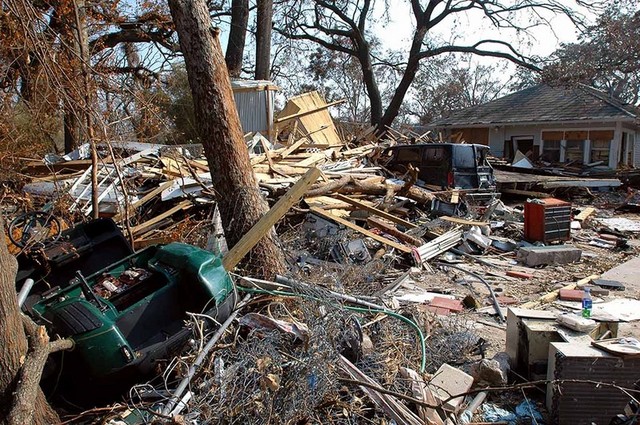
katrinadestruction.com

katrinadestruction.com

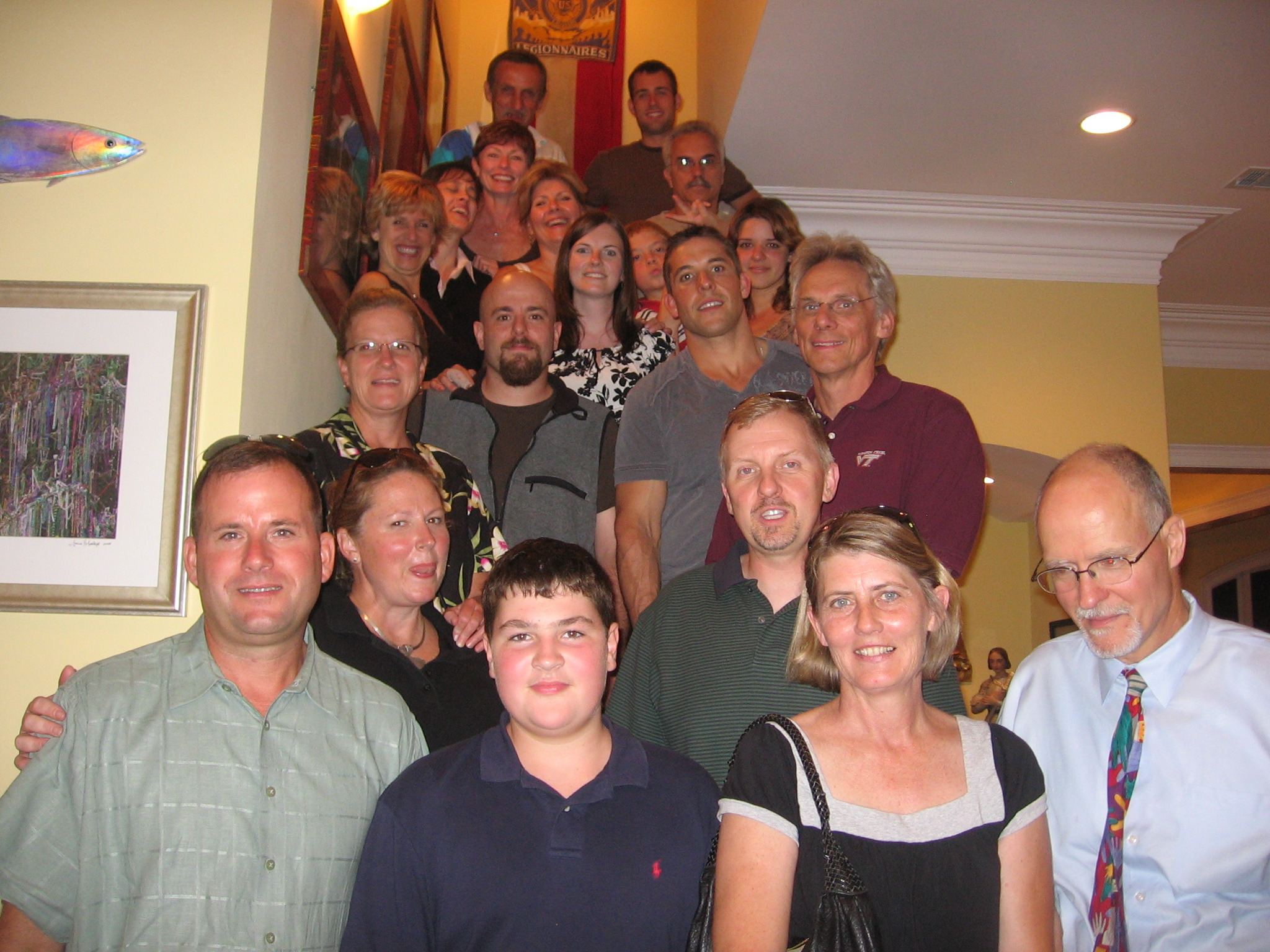
The analogy that comes to mind is walking through New Orleans after Hurricane Katrina devastated that city. I was there with a team from my church to contribute to the ongoing rebuilding efforts. And four years later, there was still ample evidence of the destruction. Shops boarded up; homes crumbling in disrepair; areas of Ward 9 barely touched because of insufficient resources to rebuild. We began that week of rebuilding with a tour of the devastation. That helped us to have a context for our work, and motivation to work, and compassion as we worked. Could it be similar as we walk through the aftermath of this tragedy as a community? That now is a time for surveying what’s broken as we pray and grieve and ask about what and how we can begin to rebuild. 

We will do this in very apparently ordinary ways. Like bringing a meal to provide immediate relief to the surviving father and daughter, and not being afraid to reach out and call or email to say, “I’m praying for you. What do you need today?” I remember the words from my counseling professor Ed Welch in a class on how to enter into the suffering of others, and he said simply,

You show up. And you continue to show up. You aren’t afraid to reach out and to contact the person [grieving or suffering an unspeakable tragedy].

If you were impacted by this tragedy, how is it changing you? What’s the damage that will need to be repaired? Such as theological questions that came unhinged that will now need deeper foundations. Or categories of “how life should work” that seem to be obliterated. Even personal questions of how to support friends in need and how to know whether or not someone is in a desperate place and how to ask for help when I need it. All of these are part of the communal story of grief and response to tragedy. Let’s discuss them together and be changed for the good by such a tragedy. Couldn’t that begin to be part of the redemption story God promises to write, even (especially) here?

…For the Lord has comforted his people and will have compassion on his afflicted. (Isaiah 49:13)

a grief of tragic proportion

Shock. Disbelief. Profound bewilderment. Deep sadness, even anger. Could we have done more? How didn’t we see this? Who could have helped? What do we do now? All of these and more flooded through me as Seth shared the news of a tragic mother-daughter death that occurred on Wednesday afternoon. A mother and a daughter who were very involved in our church, who leave behind a bereaved and broken father and an 11-year-old sister who lost half of their family on an afternoon in July. She was at camp, and immediately there was the question of how to tell her/when to get her/who should be there. Questions no grieving husband and father should have to answer. Questions he couldn’t answer. Questions we all attempted to speak our best opinions into while we, too, reeled inside with the sadness.

Seth and I witnessed the two hardest conversations of our lives yesterday as this brave father shared the details in two stages of the how with his 11-year-old daughter, and they wept together. And how can you see this and not weep? And not rage? And not feel utterly bewildered? No one saw this coming. No one. Not her best friend with whom she had lunch that day; not her husband who’s said, “She’s the center of my life!” None of us who worshiped alongside her on Sunday. Not the fellow girl scout troop moms who remember a friendly, engaged woman who loved her two daughters.

There is a sense among us who knew her of a communal fail. Why didn’t we know? How could we have helped? And this is good to ask and to explore and to take as a renewed call to engage in community (the antidote of isolation). And yet we must balance this with the reality that she must have been very good at hiding. She did not want anyone to know, for a part of her must have known that she would have been stopped. In some very secret and broken place, she decided this was best for her and her special needs daughter. But all of us left behind … this father, this daughter … whose lives will never be the same, whose stories will always be defined by this most awful of days … we grieve, we question, we are shocked, we don’t know how to go on.

Except that there is one who weeps with us. Who is in our midst. Who is not absent. And so we gathered as a church community yesterday to lament, to pray, to sing our grief and our questions without answers, to fall deep in the arms of the One who is holding us. Herein lies comfort that is real. A comfort that will meet us even when the questions will linger for the rest of our lives. There are no answers, but that’s not what we need the most right now. We need to know we are not alone, and that’s the comfort that even a deeply grieving father gave to his shattered daughter as they wept together:

“You are not alone. We are Easter people. We are Easter people. We are resurrection people.”

He said through his own sobs. There is resurrection promised, and it does not ease this week’s grief but gives a hope beneath the grief. The grief will end one day. Tears will change to joy of reunion. And in the meantime, resurrection guarantees that we have HIM with us. He is not in a cold tomb; He is alive and He is with us in the sadness unspeakable.

It was this hope and this reality of Christ-with-us that propelled Seth and me to walk up to the house of the grieving, and to walk inside, and to sit and weep and mourn. “Jesus wept,” is instructive here. Jesus, who knew Lazarus would be raised to life again, wept. He wept for his friend and with his friends. We can do no less.

******

Finding words for the feelings are also provided by our God who knows us and gives us what we need to bring to him. If you are grieving this loss or any other, I suggest reading the following as the prayers of your heart when your heart has lost its words.

 Lamentations 1-5

“Arise, cry out in the night,
at the beginning of the night watches!
Pour out your heart like water
before the presence of the Lord! …
Remember my affliction and my wanderings,
the wormwood and the gall!
My soul continually remembers it
and is bowed down within me.” (2:19, 3:19-20)


Psalm 44

“Awake! Why are you sleeping, O Lord?
Rouse yourself! Do not reject us forever!
Why do you hide your face?
Why do you forget our affliction and our oppression? …
Rise up, come to our help!
Redeem us for the sake of your steadfast love!”


Psalm 55

“My heart is in anguish within me;
the terrors of death have fallen upon me.
Fear and trembling come upon me,
and horror overwhelms me.
And I say, ‘Oh, that I had wings like a dove!
I would fly away and be at rest;
yes, I would wander far away;
I would lodge in the wilderness;
I would hurry to find a shelter
from the raging wind and tempest.’ “


Psalm 77

“In the day of my trouble I seek the Lord;
in the night my hand is stretched out without wearying;
my soul refuses to be comforted. …
You hold my eyelids open;
I am so troubled that I cannot speak.”


Psalm 88

“But I, O Lord, cry to you;
in the morning my prayer comes before you.
O Lord, why do you cast my soul away?
Why do you hide your face from me?”

embracing imperfection (July edition): living between “not quite enough” and “a little too much”

I’ve felt my inadequacy this month, which I’ll label under the category of “not quite enough.” Today all it took was hearing about a higher-than-expected car repair bill, which sent my heart sinking. Any cushion – any savings goals? They seem to have fled out the window as that bill fluttered into my text messages. A feeling of being defeated. And it’s not just that. It connects with a larger picture of feeling not quite enough as I seek to parent my “spirited” three-year-old twin daughters. I gave up on bedtime last night. I was doing all of *those things* you’re not supposed to do: empty threats, adult-like reprimands that devolved into harsh commands barked from downstairs – “JUST.GET.BACK.INTO.BED!” I felt as if I didn’t have the energy to get up from my comfy chair and interesting TV show (Parenthood in case you were curious) to do more than that. And you know what? Eventually, they went to sleep and settled down. So did I. But this morning roared to a start just minutes after I had settled into the quiet of my journal, and it felt like “you’re not quite enough” was the banner floating over my head as a mom yet again. 

“Not quite enough” is a shame sentence. A statement connecting to that vague sense of inadequacy we all carry and experience, that lurks behind any attempt to do or to be something glorious. Like a writer. I’m wrestling with feeling “not quite enough” as I long to pursue my passion to write, but feel like I don’t have quite enough time and I’m not sure I have quite enough of an audience and a message and would anyone really publish what I wanted to write?

I’m not quite enough when it comes to being a strong wife for my husband as he endures the challenges of full-time ministry as a pastor.

I’m not quite enough of a good friend because so often I can feel swamped by an over-full schedule.

But then the tone can switch, too. And I feel “a little too much” when I look at the scale and see a number there that feels 10 pounds too high. I was talking to a childhood friend who’s also recently reached mid-30s and we were commiserating about how much more difficult it is at this age and after having babies to be in the shape to which we’d grown accustomed.

I felt “a little too much” when I showed up in my full ballet leotard and tights to the “Mommy and Me” class when all the other moms (except my friend and I) had on t-shirts and yoga pants. Oops. Felt a bit out of place that day!

I can be “a little too much” at a dinner party – too intense, too counselor-esque, too brooding, too withdrawn (all at the same time).

But you know what my real problem is? It’s that I have not embraced “not quite enough” and “a little too much” as part of what it means to be a human dependent on a strong God. A God in whom I am more than enough, not because of me but because of all He gives me and all that He is for me. A God who never views me as “a little too much” because He delights in me. Yet I kick against my human limitations while God continues to shower me with grace. A God who says gently in the stolen, quiet moments (few though they be) that how well today went does not equate to how much He loves me. (Thank you, Gloria Furman, in Treasuring Christ When Your Hands Are Full for that thought!) A God who reminds me that who I am is not what my ever-wavering bank account shows or the scale reveals, but it is forever redeemed, forever loved, forever holy because of Jesus’ forever grace. 

beauty in darkness: what’s good about “Good Friday”

I had skimmed over the verse countless times in the 30+ years I’ve read and meditated and studied this familiar account. Good Friday is the time to read the crucifixion story. A story of horror turned beautiful. Yet if you’re like me, too often I jump to the “turned beautiful” part without staying with the horror of what Jesus endured. It’s uncomfortable to sit with the events that culminated in the most gruesome of deaths on a Roman cross. But this week – this Holy Week – asks us to do just that. To sit. To see. To hear. Because in the horror, we are saved. We are deserving of all that the King of Glory endured innocently. And we who bear his name are called to endure similar suffering for the sake of love. Love enters into the messy, the broken, even the so-gruesome-you-can’t-bear-to-hear-it and Love takes it. Love endures. It does not run away. It stays. It shows up.

What feels impossible for you to endure today (and yet you must because of Love)? How can Good Friday become truly “good” for you today? What brokenness do you run from in your own heart and in the lives of those around you?

In my calling as a counselor, I often sit with those who have endured stories of abuse that are too difficult to name. And to think that what I have a hard time hearing is what they lived through. Well, that causes you to pause. To pray. To beg for redemption, for healing, for a Justice to make it all right. 

On Good Friday, we are given just that. Not only in the cross, but in the events leading up to the cross. Here’s the verse that stopped me in my tracks this morning (from Matthew 27:27):

Then the soldiers of the governor took Jesus into the governor’s headquarters, and they gathered the whole battalion before him.

Do you know how many soldiers are in a battalion? I didn’t either, so I checked the footnote and saw that a battalion is “a tenth of a Roman legion; usually about 600 men.” 600 men. Quite different than movies who portray this portion of the scene with a couple soldiers kicking Jesus around. That’s bad enough, but this has an arena quality to it. 600 soldiers. That’s a very full auditorium hall. And what did they gather to do? Well, read on:

And they stripped him and put a scarlet robe on him, and twisting together a crown of thorns, they put it on his head and put a reed in his right hand. And kneeling before him, they mocked him, saying, ‘Hail, King of the Jews!’ And they spit on him and took the reed and struck him on the head. And when they had mocked him, they stripped him of the robe and put his own clothes on him and led him away to crucify him.

Utterly shameful. Shameful if it’s an audience of one, but for these horrors to happen before an arena-size audience of 600? Shame magnified. Shame too great for words. Twice he was stripped of his clothes. In addition to the emotional abuse of this mockery, there was the physical abuse of being “crowned” with thorns and beat on the head with a reed. What is striking is Jesus’ response. Nothing. The one who was God incarnate – who could have called down fire from heaven to devour these fools – stayed still and endured. That is the miracle. The miracle that turns bad into good, abuse into redemption, mockery into honor.

Centuries before, a prophet called Isaiah wrote about this and puts words to the what and the why of all that Jesus endured on “Good” Friday:

Surely he has borne our grief
and carried our sorrows;
yet we esteemed him stricken,
smitten by God, and afflicted.
But he was wounded for our transgressions;
he was crushed for our iniquities;
upon him was the chastisement that brought us peace,
and with his stripes we are healed. …
He was oppressed, and he was afflicted,
yet he opened not his mouth …

Because Jesus did not open his mouth when enduring abuse, we can open our mouths and beg for healing and redemption. Healing from our own abuse and from the ways we have abused and oppressed others through our sin – through our brokenness seeking false healings.

In the place of your abuse, there is healing. Because he took the shame for you.

In the place of my sin, there is peace. Because he carried the guilt for me.

In the places where you and I have been silenced, our voice is restored. Because his was silenced this Good Friday.

So go. Walk as one who is healed, who is at peace, who can speak up and speak out and speak of darkness turned beautiful on this most good of Fridays. 

true hope in a troubled time

As an American in tune with the news of the day (and often the hour thanks to news radio), I find it inescapable to realize that life as we’ve known it is undergoing a drastic change. People are losing their assets, their jobs, their homes, and with all of it their hope.  Or are they?

It seems as if we as a culture are experiencing the reality that hope cannot be stored in money. It’s a truth we try not to live by as Americans who are wealthy by the world’s standards. We buy what we do not need with money we do not have. And at some point, the security promised by money and material possessions evaporates. Yet that fits with ancient wisdom. Listen to this, penned centuries ago by a Biblical writer: “Those who love money will never have enough. How meaningless to think that wealth brings true happiness!” And see if this doesn’t sound like it was written just for us today: “There is another serious problem I have seen under the sun. Hoarding riches harms the saver. Money is put into risky investments that turn sour, and everything is lost.” Both are from the book of Ecclesiastes, found in the Old Testament (chapter 5, verses 10, 13, 14).

The question before us today is similar to the one that confronted the philosopher of Ecclesiastes. What is worth living for and hoping in? Our American answer for troubled times is quite different than that of Ecclesiastes. It’s as if we’ve shifted our hope from Wall Street to the White House. The new President will be our savior. He will bolster the economy with his proposed tax cuts (and raises), reform healthcare in the U.S. either through a tax credit or by offering a universal plan, bail out bad mortgages, bring peace to the Middle East. Really? All of that power will be held by one man?

I beg to differ. I think our hopes are misguided if we think either Obama or McCain can do all that’s promised. On November 4th, I will be going to the polls to cast my vote as a responsible citizen, but I have a hope that transcends the outcome of the election (one way or the other). God is King over all, and His Kingdom is one that can’t be shaken (regardless of how much my earthly kingdom is shaken). It will be realized one day.

I don’t know when, but I am hoping because I see evidence of that Kingdom already breaking in on earth. My life has been changed by Jesus Christ. And it is being changed by Jesus Christ. I am not yet what I will be, but there are glimpses and hints. Seth and I don’t fight as often or as tenaciously as we did in our first year of marriage. I give in more often (and so does he). I don’t say everything that pops into my head. I think before speaking (amazing concept, I know). When I inevitably screw up, I am slightly quicker to ask forgiveness from him. And I could go on. If I am being changed, and I see others’ lives who are being changed in similar ways through a relationship with Christ. Through Cresheim Valley Church and my job as a counselor at Chelten Baptist Church, I am part of communities of people whose lives are being transformed (and I get to watch and sometimes be part of that!). There is hope that transcends our shaky economy and uncertain politics.

And the writer of Ecclesiastes agrees. He sums it up as follows: “That’s the whole story. Here’s my final conclusion: Fear God and obey his commands, for this is everyone’s duty.” (chapter 12, verse 13)

10 reasons I’m praying for NOLA as Gustav approaches

10. Our team of 19 just arrived back barely a week ago from a mission trip to NOLA doing Katrina relief.

9. It will be expensive to get our team back down there so soon …

8. Some homes still look like this THREE YEARS AFTER Katrina hit.

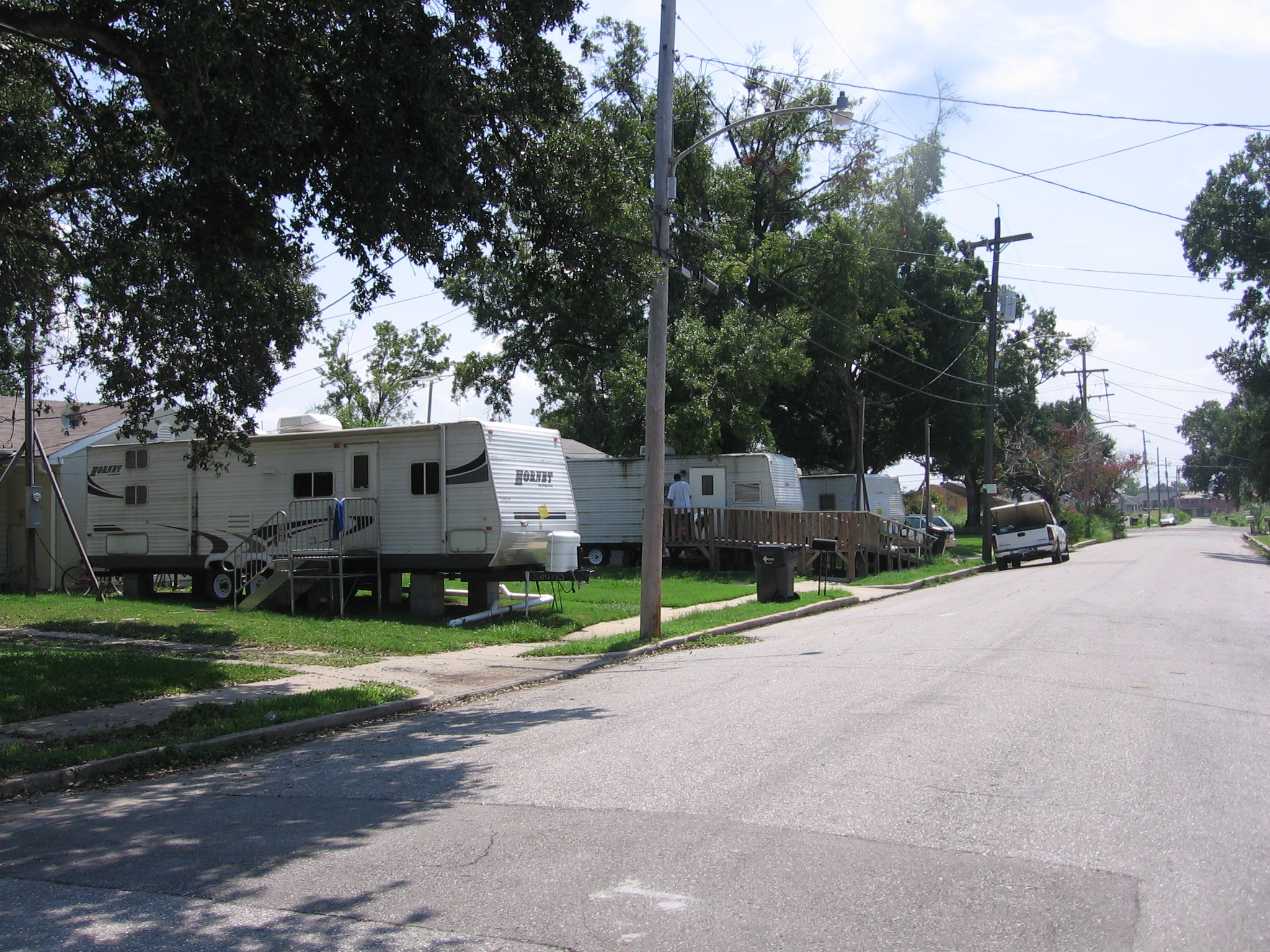
7.What havoc will a hurricane wreak on the FEMA trailers? Forcing people to lose their 2nd home before their 1st one is finished seems quite the tragedy. (They’re still very much present in some of the worst hit parishes, like East Orleans and the lower 9th ward).

6. Many doubt whether the levee problem has been sufficiently addressed. In fact, they’re still leaking. And of the 20% that were repaired after the breach … what about the remaining 80%? Read more at this link: http://www.nola.com/hurricane/index.ssf/2008/08/incomplete_levee_system_leaves.html

5. Are the looters already out prowling? A friend we met last week says some people were hesitant to evacuate out of fear of their homes being looted if they left.

4. Many homes were not re-built in an elevated condition because of the expense of doing so. If the same thing happens as Katrina, these homes will be devastated … right after being renovated.

3. Why so soon? It seems many have just gotten over the post-traumatic stress caused by witnessing such an event with so much personal devastation. Everyone we met there has a story, many of them quite heart-wrenching.

2. Those survivors who we met: Lisa, John, Minette, Sherry, and Gary (for starters). Their faces come to mind as I pray.

1. Our God is a God of compassion, the Father of mercy … may He have compassion on this city and His people within its walls.