favorite quotes from “The Horse and His Boy” (C.S. Lewis)

While on a road trip to South Carolina a few weekends ago, I listened to the audio version of “The Horse and His Boy,” one of C.S. Lewis’ books in the beloved Narnian Chronicles. It paints a beautiful picture of redemption – of Shasta’s journey from slavery to freedom, from being owned by another to discovering his royal identity. It truly becomes a metaphor for those who are Christ-followers. Enjoy a few of my favorite “nuggets”:

[Aslan to Shasta toward the end of the book] “There was only one lion … I was the lion … who forced you to join Aravis. I was the cat who comforted you among the houses of the dead. I was the lion who drove the jackals from you while you slept. I was the lion who gave the horses the new strength of fear for the last mile so that you should reach King Lune in time. And I was the lion you do not remember who pushed the boat in which you lay, a child near death, so that it came to shore where a man sat, wakeful at midnight, to receive you.”

[to Shasta when he questions Aslan and asks for an explanation for Aravis’ story] “Child,” said the Voice, “I am telling you your story, not hers. I tell no one any story but his own.”

Identity, security, glory (Ephesians 1.1-14)

When was the last time that you heard something that you thought was too good to be true? It probably won’t take you long to think of something, whether it’s as trivial as the diet pill pop-up advertisement or the free* vacation (*requiring only that you listen to their 2 hour long time-share presentation and give your credit card info to them so that they can charge a non-refundable $75 deposit  – true story, by the way, that happened to friends of mine a couple weeks ago). Yet I imagine that you, like me, have other deeper and more life-defining moments of disappointment: like the parent who walked out on your family when you were young or the spouse who seemed to make all your dreams come true – until you discovered he or she had been living a double life for years. These kind of disappointments make us as a generation prone to cynicism. Or in its “milder” forms perhaps “realism” or “not-getting-your-hopes-up-too-much” kinds of approaches to life.

God’s promises for the Christian in Ephesians 1:1-14 require that we leave our disbelief, cynicism, disappointment behind. Because to comprehend even a small part of what  God is saying will feel at first that it is simply too good to be true. Yet we forget the difference between our Creator God and our own fragile and broken humanity. People will always disappoint, but God stays true forever. So suspend your disappointment, and imagine that this is true for you as one who believes in Christ! Be encouraged and amazed by our God … and come to Him with your worship and your questions.

1Paul, an apostle of Christ Jesus by the will of God,
To the saints in Ephesus, the faithful in Christ Jesus:

2Grace and peace to you from God our Father and the Lord Jesus Christ.

3Praise be to the God and Father of our Lord Jesus Christ, who has blessed us in the heavenly realms with every spiritual blessing in Christ. 4For he chose us in him before the creation of the world to be holy and blameless in his sight. In love 5he predestined us to be adopted as his sons through Jesus Christ, in accordance with his pleasure and will— 6to the praise of his glorious grace, which he has freely given us in the One he loves. 7In him we have redemption through his blood, the forgiveness of sins, in accordance with the riches of God’s grace 8that he lavished on us with all wisdom and understanding. 9And he made known to us the mystery of his will according to his good pleasure, which he purposed in Christ, 10to be put into effect when the times will have reached their fulfillment—to bring all things in heaven and on earth together under one head, even Christ.

11In him we were also chosen, having been predestined according to the plan of him who works out everything in conformity with the purpose of his will, 12in order that we, who were the first to hope in Christ, might be for the praise of his glory. 13And you also were included in Christ when you heard the word of truth, the gospel of your salvation. Having believed, you were marked in him with a seal, the promised Holy Spirit, 14who is a deposit guaranteeing our inheritance until the redemption of those who are God’s possession—to the praise of his glory.

I want to highlight three aspects of this feels-too-good-to-be-true passage:

  1. The identity of God’s people: in Christ
  2. The security of God’s love in Christ
  3. The beauty and glory of God’s purpose in Christ

1. The identity of God’s people: IN CHRIST

  • Jesus Christ is key to the security of God’s love and the beauty of God’s purpose, and so it is in Christ that we find our identity. We’re now, like those this letter was addressed to, saints – faithful – holy – blameless – we’re loved because we are  “the Beloved”: is this how you think of yourself?
  • We are:
    • Blessed in Christ (3 & 6)
    • Chosen in Christ (4)
    • Adopted through Christ (5)
    • Redeemed & forgiven through Christ’s blood (7)
    • Recipients of an inheritance in Christ (11) through hoping in Christ and believing in Christ (12-13)
  • We exist by His grace in Christ, through His grace in Christ, and for displaying His grace in Christ. “For the praise of His glory” is the refrain of this passage. Glory means God’s beauty, goodness, character. In essence: who He is. This phrase means that it’s not about me but about God. My purpose and identity is discovered as I see myself in Christ: redeemed, holy loving — existing to love God with all I am and love others as God loves me. This is not, as a friend of mine said, making us less of who we are but MORE of who we are meant to be.
  • We are God’s own adopted children enjoying the same rights as natural children: both privileges and responsibilities.

2. The security of God’s love in Christ

  • Secure because His love began before the beginning of time – before you were born, before the world was created. God knew everything about you, yet chose to love you. “Having been predestined” means that God gave you a destiny before the beginning of time, and this destiny was to be His beloved one. It is not unlike the love of a mother for her yet unborn child, or parents anticipating adoption: they choose to love this child before they know him or her.
  • Secure because it depends on God’s work, not yours. It is not the strength of our faith that matters most, but the faithfulness of God, as my friend April reminded me. It is primarily God’s activity that is highlighted in this passage, and our activity is merely to respond. God chose, adopted, redeemed, forgave, gave an inhertance, sealed, lavished, and made His will known – to US! Our response is to hope in Christ by believing in Christ when we hear the gospel (the good news that Jesus Christ died and rose again that we may be called “holy and blameless” before God – that our sins may be forgiven and redeemed).
  • Secure because of this cascade of blessings (vv. 3-14). God not only chose us in Christ, but also adopted us in love. He not only adopted us in love, but also redeemed us. Not only redeemed us, but also forgave us. Not only forgave us [the debt], but gave us an inheritance [put credit to our account]. And how do we know we won’t lose this? We’re not only given an inheritance, but sealed us with the Holy Spirit as a guarantee of what’s to come. This is total and complete security from beginning to end.
  • What difference does this make? [what Ephesians lays out for us is termed by theologians as the doctrine of election]  I can testify personally that it makes all the difference in the world. Before God opened my eyes to the beauty of His secure love for me, I constantly vacillated between pride and fear. On the days when I felt like I had done pretty good (enough good deeds, loved others, wasn’t impatient in traffic/etc), I would feel prideful – confident that I had deserved God’s favor. However, on the many other days when I saw my own failures, I would be full of fear, worry, insecurity, and anxiety. How could God possibly love me if I struggled so much? The security of God’s love in Christ frees me from both. I have no room for pride, because God has done it all. And fear is banished, because I can’t be separated from God’s love. (see Romans 8:28-39 for another full description of these truths)

3. The beauty  and glory of God’s purpose in Christ

  • His love and choosing of us in Christ isn’t a haphazard wish, but it is intentional and purposeful. Verse 5 says that these promises are “according to the purpose of his will,” verse 9 repeats that: “according to his purpose,” and  verse 11 sums it up by saying it is all “according to the purpose of him who works all things according to the counsel of his will.” Even right after the Fall in Genesis 3, there is the promise that Jesus will come – the seed of Eve who will crush the serpent’s head – God purposed to send Christ to make it possible for us as sinful people to become holy and blameless.
  • His purpose/will is to bless us with “every spiritual blessing” – to lavish us with “riches of his grace,” making us who hope in Christ recipients of His grace.
  • His purpose/will is that we who were his enemies, who are broken and marred by sin, become holy and blameless – as Christ takes our sin and gives us His righteousness.
  • And God’s purpose/will is not only to reconcile individuals to himself and to each other, but to restore all things in Christ – in heaven and on earthin the “fullness of time” (v. 9-10). This is all about understanding the larger story, summarized so well by N.T. Wright in his excellent devotional commentary on Ephesians as follows:

“God’s great prayer at the opening of this letter is a celebration of the larger story within which every single Christian story — every story of individual conversion, faith, spiritual life, obedience and hope — is set. Only by understanding and celebrating the larger story can we hope to understand everything that’s going on in our smaller stories, and so observe God at work in and through our own lives.”

It is often hard to wrap my mind around such a beautiful picture of full redemption. That is why I think C.S. Lewis has done it so well in the closing chapter of the last book in his excellent series, the Narnia Chronicles, entitled “The Last Battle.” Soak it up – and believe it is really as good as it seems and as true as it is good:

Then Aslan [the character of a good lion who represents God in these stories] turned to them and said, “You do not yet look so happy as I mean you to be.”

Lucy said, “We’re so afraid of being sent away, Aslan. And you have sent us back into our world so often.”

“No fear of that,” said Aslan. “Have you not guessed?” Their hearts leaped and a wild hope rose within them.

“There was a real railway accident,” said Aslan softly. “Your father and mother and all of you are — as you used to call it in the Shadowland — dead. The term is over: the holidays have begun. The dream is ended: this is the morning.”

And as he spoke He no longer looked to them like a lion; but the things that began to happen after that were so great and so beautiful that I cannot write them. And for us this is the end of all the stories, and we can most truly say that they all lived happily ever after. But for them it was only the beginning of the real story. All their life in this world and all their adventures in Narnia had only been the cover and the title page: now at last they were beginning Chapter One of the Great Story which no one on earth has read: which goes on forever: in which every chapter is better than the one before.

Introduction to Ephesians: Identity & Grace

So my apologies to those of you who have faithfully followed my blog. I took a break because I was preparing to present two lectures on Ephesians to our church’s women’s Bible study. But I hope you’ll also be encouraged by these truths as well. Here’s week 1: introduction to Ephesians …

INTRO: The New Year is often a time for reflection, review, and resolutions. (and hey, it’s still January – so it’s not too late!) I tend to be a reflective person, and so there’s something I love about this transition. What’s often inherent in the “new year promise” is the hope of a new identity. Yes, you can have the body you’ve always wanted, and so new gyms lure you in with promises of new rates and fitness challenges – and the “January crowd” always packs it in. Finances went bad last year? This year offers new promises of sticking to your budget and paying off debt. This is the year to finally put to rest old family feuds; to finally face the “ghosts from your past”; to finally overcome that besetting habit that’s plagued you. And our resolutions reflect our desire to recreate our identities – to make over our selves into the better versions we know we could be.

I, too, enjoy this aspect of a new year. I’ve reflected on the old year; thought about how I want this new year to be different. There’s something hopeful about the freshness of the calendar year. Listen to these resolutions I came up with in 1996 (when I was a junior in high school):

1. To be more diligent in schoolwork-try very hard to complete the work the night before.

2. To go to God first about everything that happens

3. To have a more consistent walk with God – not so many ups and downs

4. To not be a part of a car accident in the next year

5. To exercise at least once a week

6. To have a daily quiet time of 5 minutes or more

7. To be rid of all jealousy

8. To have better family relationships

9. To watch for God’s hand in all that happens in my life and see the good in all situations

And apparently I was still working on some of the same things in 1997 (senior year of high school):

1. To have a daily quiet time with God greater than 15 minutes

2. To exercise 3 times a week [at least I moved up closer to what’s recommended!]

3. To give each day to God by prayer and thank him for each day in the evening

4. To cease complaining

5. To try to complete all homework before Sunday

6. To be uninvolved in a car accident this year [I was only in one, by the way, and that was Dec. ’95]

7. To live each day in full reliance upon my Lord with the hope that He has a wonderful plan for my life and “is able to do immeasurably more than all we ask or imagine” (Eph. 3:20)

These resolutions are not bad in and of themselves. I included some good goals — yet the truth is that I’m still working on much of them! The promises of Ephesians offer something much better than our reflections and resolutions that accompany the New Year. Ephesians speaks directly to the question of identity – offering you the reality of the identity you’ve been given if you are a Christian, or the identity you’re invited into if you’re not yet a Christian.

Who needs Ephesians? All of us do! As you can tell from my new year’s resolutions, I tend to struggle with finding my identity in my own righteousness – my efforts to pray more, read the Bible more, exercise more, even love people more – and I forget grace. I first really read, studied, meditated (and even attempted to memorize) Ephesians the summer between my sophomore and junior year of college. For those of you who have heard my testimony of God’s work in my life, this summer is the one I refer to as “the summer of grace.” I entered this summer an exhausted legalist, trying to perform the works God required of me in my own strength, and I left the summer an energized, free daughter of God, empowered by grace to minister in new ways to the 50 freshmen and sophomore women I was an R.A. to my junior year. I can say that I would not have gotten through that stretching year without the grace of God in Christ described so beautifully in the book of Ephesians.

Where are you?

  • Maybe you, like me, are a legalist worn out from trying to live a holy life and do good. You’ve probably focused on the last half of Ephesians and skimmed over the first half. Yet these last chapters cannot be lived apart from the grace we find in Christ – which is the focus of the first 3 chapters. You need to remember to start at the beginning!
  • Or perhaps you are a Christian who has forgotten what kind of life grace compels you to. The struggle against sin has ceased to be a struggle, because you’ve given in and now find yourself caught in habits you’re ashamed of. You know you’re “saved by grace” anyway, so what’s the big deal? Jesus comes to you through the message of Ephesians to call you into a bigger life – one of obedience and transformation motivated by grace. You’ve been rescued from darkness, so live no longer there.
  • Maybe you are unsure of Jesus and His claims. You wonder what all of this Jesus stuff is all about. You heard about the hope of a Savior to come promised and pointed to through our study in Genesis, but you wonder why you need Him. Or if you really need Him at all. The gospel message is loud and clear throughout Ephesians – describing what grace is and why all of us need it.
  • Perhaps you’re doubting who you are and you are struggling to find your identity. You’re looking in all the typical places: marriage (or independence), children, career, even good deeds, friendship, fitness & health … yet you find that each of these crumbles as soon as you seek to hold onto it and find your life here. You were made for more than this.

This is a letter written to people who also were struggling with identity and reconciliation: Gentile Christians in the region surrounding Ephesus.

  • Ephesus was the 2nd largest and 2nd most important city in the Roman Empire (2nd only to Rome!) – modern day Turkey
  • For Gentiles to be able to be in God’s family was revolutionary. Before Jesus Christ, spots in God’s family were reserved only for Jews. After Jesus, salvation is made available to all who believe, both Jews and Gentiles. The Jews weren’t too happy about that – and this left the Gentiles feeling a bit insecure of their identity.
  • PAUL wrote this letter to as a circular letter, meant for Christians in this entire region, to assure them of their identity as Gentiles in Christ. (like a group email – why there’s not as many personal references like in the parallel book of Colossians, written around the same time)
    • How was Paul qualified? What were his own identity struggles? He was a Jew who was known as “Saul” and who persecuted Christians. God interrupted him en route to Damascus and saved him, calling him now Paul. And then he experienced intense persecution for the rest of his life as he became a missionary – bringing the good news of the gospel of Jesus Christ’s salvation through Asia, all the way to Rome.
    • Yet he’s writing while imprisoned in Rome – for the very identity of “Christian” that he now writes and reminds them of. Imagine the impact this would have had on the first readers!

So what does Paul write? What will you find here?

  • THEMES:
    • Central message of be who you are – in contrast to who they used to be and how they used to live in the past
    • Your past before Christ, your future in Christ, and how this is to affect your present day-to-day life in Christ
    • Reconciliation: being made right with God and with others – “Only through Christ can all other division be brought to an end.”
    • Truth and beauty of the Triune God (God the Father, Jesus Christ the Son, the Holy Spirit)
    • Grace
    • Challenge/call to exhibit God’s glory and grace through daily life
    • God’s action and His work
    • A high calling empowered by the Spirit
    • A love story written before the beginning of time
    • How to engage in the spiritual battle we’re in
  • STRUCTURE:
    • Intro/greeting; body of the letter; closing
    • Two halves: 1-3 – who God’s made you as a Christian; 4-6: call to live like who you really are
    • Eloquent prayers
    • Truth and promises that are gems of grace to be treasured
    • Practical exhortations
    • Household code
    • Spiritual warfare

It’s very easy with the changes of life, whatever they might include for you in this new year, to forget who you are. Or to feel like you’ve lost a part of who you are. Changes that come with moving are always hard for me and provide an opportunity for me to re-examine where I’ve really been finding my identity – is it in being known by friends, playing a crucial role in a small church plant, being a counselor with a large church counseling center, not getting lost when I drive. The most recent move for us from Philadelphia to Norfolk has been no different! And I’ll admit that although I would say this has been the best, smoothest transition I’ve ever experienced, it has still served to be a bit of an identity-shake-up for me.

And I found myself feeling a bit down in December – generally unmotivated, wondering whether I was really making a difference, missing familiar holiday celebrations with close friends, and questioning what my identity is here in Norfolk.

Yet God met me through the study of Ephesians to remind me that who I truly am has not changed at all over this year, and it won’t change for the next 10 years either. It gave me hope and motivation to pursue what God’s given me to do during this season, not having to make it my life or where I’m finding my meaning (which would make any task unbearable) – and there’s been a true sense of joy where there was a vague sense of discontentment because of the riches that are mine in Christ.

So our prayer for you as you begin to read this book, either for the first time or the 50th time, is that you will be refreshed and revitalized in seeing the beauty of who Christ is for you and who you are in Christ – and it will become a letter that you will keep close to you to return to often.

[you can hear the talk at this link]

reflections in the New Year

Keeping a journal is probably one of the best ways for me to remember God’s work in the past – His faithfulness and steadfast love. So occasionally, I will re-read old journals to be reminded of what God’s done … and I usually also am reminded that many of the struggles I have now are not new! I’ve been there before – and so has God. In my journal, I write about the day and reflect on whatever passage from the Bible I’m read as well as writing down any quotes from books I’m reading. In reviewing a journal from 2008, I found the following quotes – that certainly speak to me as much now as they did then.

“For too long we have been in a far country: a country of noise and hurry and crowds, a country of climb and push and shove, a country of frustration and fear and intimidation. And He [God the Father] welcomes us home: home to serenity and peace and joy, home to friendship and fellowship and openness, home to intimacy and acceptance and affirmation.” – Richard Foster

“A common but futile strategy for achieving joy is trying to eliminate things that hurt: get rid of pain by numbing the nerve ends, get rid of insecurity by eliminating risks, get rid of disappointment by depersonalizing your relationships. And then try to lighten the boredom of such a life by buying joy in the form of vacations and entertainment.” – Eugene Peterson

So that brings me to two resolutions for this new year and the new decade … ones that I will probably keep repeating until the day that Christ takes me Home to heaven: (1) to find my home and rest in God in a deeper way (2) to pursue true joy – not escapes or false substitutes for it.

Did you make any New Year’s resolutions? If so, what were they?

Just FYI – other posts I wrote about resolutions: [scroll down to the bottom of the pages for the resolutions entries]  2006, 20072008

Advent meditations week 4/Christmas: love


As I am surrounded by loving family this Christmas, it is not hard to reflect on the love of God in Christ this holiday is meant to celebrate. Yet I know that for so many, Christmas becomes a painful reminder of the absence of love. Perhaps it’s the memory of a loved one who has passed away. Or maybe it’s physical distance from one(s) you love. Or emotional/relational distance due to conflict or feuding. Into this pain that the word “love” can hold, the beauty of Christ our Redeemer becomes even more powerful. Here is one whose love is eternal in measure, depth, quality, essence. No good-bye is ever forever; no fighting will cause conflict too great for reconciliation; there is even hope for life beyond death.

Where? And how? The promise of God is no haphazard well-meaning wish. It’s a covenant of Love guaranteed by blood. The blood of his son, Jesus, sent to earth as a vulnerable baby. Birthed in a cave. Cradled in a feeding trough. Celebrated by lowly shepherds. Rejoiced over by angels. Worshiped by kings from the East. Despised by the king (Herod) in his homeland. Anticipated by a prophet (Simeon) and a prophetess (Anna) in the temple. Announced by the prophet Zephaniah centuries beforehand, who spoke this about this one who would come to bring eternal Love. Listen and rejoice that there is such a Love – found through a saving relationship with God through Jesus Christ: [substitute “daughter of Zion,” “Israel,” “Jerusalem” with your name]

14Sing aloud, O daughter of Zion;
shout, O Israel!
Rejoice and exult with all your heart,
O daughter of Jerusalem!
15The LORD has taken away the judgments against you;
he has cleared away your enemies.
The King of Israel, the LORD, is in your midst;
you shall never again fear evil.
16 On that day it shall be said to Jerusalem:”Fear not, O Zion;
let not your hands grow weak.
17The LORD your God is in your midst,
a mighty one who will save;
he will rejoice over you with gladness;
he will quiet you by his love;
he will exult over you with loud singing.

18I will gather those of you who mourn for the festival,

so that you will no longer suffer reproach.

19Behold, at that time I will deal
with all your oppressors.
And I will save the lame
and gather the outcast,
and I will change their shame into praise
and renown in all the earth.
20At that time I will bring you in,
at the time when I gather you together;
for I will make you renowned and praised
among all the peoples of the earth,
when I restore your fortunes
before your eyes,” says the LORD.

Advent meditations week 3: joy

Christmas joy as a child seems to come more easily than for us too-often-jaded (and stressed out) adults. I reflected on this in a post 4 years ago. The cynical side of me dismisses that with the explanation that a child’s joy is often an adult’s stress (like all of their gifts they open gleefully on Christmas morning). Or with a reflection on a child’s naive belief compared to an adult’s “innocence lost.” (who doesn’t remember how disillusioning it was to learn the truth about Santa?) But then there’s the part of me that is fighting cynicism and remembers Jesus’ words in Mark 10:15 –

I tell you the truth, anyone who will not receive the kingdom of God like a little child will never enter it.

And so perhaps this Christmas, we need to learn from the children around us and enter into true Christmas joy. Pure delight and awe and enthusiasm for this season. For Christians, we have every reason to rejoice at what is celebrated – God becoming man – and this week’s Advent readings reminded me of this hopeful mystery.

It began in a strange place: Habakkuk 3, but with a chapter that closes in verses that have given me joy in the midst of some of the darkest and saddest seasons –

17Though the fig tree should not blossom,
nor fruit be on the vines,
the produce of the olive fail
and the fields yield no food,
the flock be cut off from the fold
and there be no herd in the stalls,
18 yet I will rejoice in the LORD;
I will take joy in the God of my salvation.

What this seems to mean is that God is his strength. Not his “herds” or “vines” or “fields” or “fig trees.” (I’m thinking “money” or “career” or “marriage” or “friendships” or anything else I think will give me strength only promised by God.) When all of that is stripped away, he still has joy because he has God. And because God has come to earth in the person of Jesus Christ and now dwells in the hearts of all who believe, there is the promise that God will never leave me. And so neither will joy.

Joy is guaranteed by the coming of the “Helper” – the Holy Spirit who will reveal all things and who guarantees that we will see Jesus again and be filled with joy. (John 16:5-28) I get a taste of this future joy now as I pray in my Father’s name and watch him answer prayer. As well as when I listen to and read God’s Word – when God works its effect on me, I will “go out in joy”  and “be led forth in peace” because that is the purpose for which he gives His Word. (Isaiah 55:9-13)

Psalm 66, 96, Isaiah 12, and 1 Peter 1:3-9 expand on the concept of Christmas joy by giving reason after reason to “shout for joy to God, all the earth …” (Psalm 66:1). It’s a joy at the gifts we’ve received, not unlike children on Christmas morning. The difference is that these are gifts that have been guaranteed to last forever and which will impart a joy to carry us even through the trials of life. And perhaps that trial includes Christmas this year – the promise is that there is yet a joy to be found and celebrated.

Advent meditations week 2: peace

Peace: what an elusive concept this time of year! And yet it is the heart of Christmas. Who needs peace? Perhaps images of war in the middle east come to mind. Or maybe it’s closer to home: a family feud which makes you dread the inevitable holiday “celebrations” together. If you’re married, you might think about your spouse and the ceaseless arguments that seem to have taken away the feelings of love and romance. If you have kids, you may be groaning right now at overhearing yet another sibling squabble.

Let’s take it one step further and say that all humanity needs peace with their Creator. Aren’t our arguments, conflicts, wars just an overflow of our inner unrest? An inward sense that all is not right in the world? All creation is groaning for peace. The kind of peace that the Advent meditations from last week give us a picture of — where we are to place our hope. It is ultimately people being reconciled to God. But how? God bridges the gap. He initiates and does what seems impossible: divinity is clothed with humanity and takes the form of a baby. The Advent readings from this week focus on peace from several angles.

There’s the image of God as a shepherd bringing peace, tenderly tending his flock like a shepherd from Isaiah 40:9-11

He will tend his flock like a shepherd;

he will gather the lambs in his arms;

he will carry them in his bosom,

and gently lead those that are with young.

And the description of an inward peace that’s known by those who see that the Lord is near and who lift up their anxiety to him – receiving this peace that “passes all understanding” to guard their hearts and minds. How?  In Christ Jesus – God made flesh; God coming near. (Philippians 4:4-7)

This peace does not mean the lack of affliction, but the experiential knowledge of God’s comfort in the midst of affliction. It is finding God’s comfort in the affliction that brings peace. (2 Corinthians 1:2-5)

There’s the surprising image in this list of “peace” passages of a city that was desolate that’s now filled with joyful celebration. A city marked by restoration and rebuilding – a people marked by the cleansing of the guilt of their sin. And how? A “righteous branch” [descendant] of David who “shall execute justice and righteousness” and the people of this new city are known by the name: “The Lord is our righteousness.”  (Jeremiah 33:7-16) This is key to true peace: I cannot earn my own righteousness, but I trust that Christ has done so for me and I rest from my striving, my posturing, my attempts to be good on my own. And I rest in the peace from the Prince of Peace. And as a result, I am changed – my family is changed – my community is changed – entire cities are changed – to be havens of peace. Where do I need to begin? Where do you need to begin?

It begins by following the One who faithfully persevered in bringing peace and did not grow faint or easily discouraged. He did not give up on anyone, but is gentle, tender, compassionate. He brought peace not through “crying aloud in the streets” like a revolutionary political hero that we’d expect  (Isaiah 42:1-9) but actually came humbly, riding on a donkey and speaking peace (Zechariah 9:9-17). Now peace comes as the people of God continue the work of the Peace-giver. And so let us follow him this Christmas season into paths of peace!

Advent meditations: week 1 – hope

Each week of Advent, I will be posting meditations based on that week’s theme of Advent readings. I would love for you to join in as well! Let us together celebrate Christ who brings hope, peace, joy, and love.

First of all – hope. We began with these beautiful verses in Isaiah 40:1-5. A few phrases that stood out to me:

“Comfort, comfort my people, says your God.

Speak tenderly to [her] and cry to her that her warfare is ended,

that her iniquity is pardoned …” [English Standard Version]

What does it mean for her warfare to end? Christ is coming: He is bringing peace and reconciliation — and that will flow from a redeemed relationship with God. (Though different than they imagined – not an end to political warfare.) Lord, remind me that my warfare has ended. I have nothing to prove or to win or to defend … You are my peace and my identity.

And then to notice what hope feels like, we read Psalm 42.

“But each day the Lord pour his unfailing love upon me,

and through each night I sing his songs,

praying to God who gives me life.” [New Living Translation]

Hope means thirsting, panting for God – the living God. In the midst of feeling downcast, I hope in God (despite the turmoil of my emotions). Hope is to praise God as my salvation; it is to remember HIS steadfast love. It includes crying for relief from the enemy’s oppression — not wanting to believe the enemy’s taunts of “where is your God?” Summary: In the midst of feeling downcast, there is hope to be found in God — if I remember to look upon Him!

How does Romans 8:18-27 add to our definition of hope? We see that not only we ourselves, but also all creation is hoping and even groaning for full redemption that Jesus Christ will bring. We wait eagerly; hoping for what we don’t yet see; waiting for it with patience (and the Spirit helps us in waiting, believing, patience, hope). Hope transforms present suffering into future glory. The Spirit intercedes for us while we wait and hope and groan. “Wait/waiting” is used twice; “groaning” is repeated three times; “hope” is repeated six times. And who are the subjects of all of this waiting/hoping/groaning? Creation (repeated 5 times); the Spirit/God (repeated 8 times); and WE are (repeated 12 times). This Advent passage makes it clear that even after Christ’s first incarnation, we are still hoping for his second (and final) coming – for the end of suffering and the revealing of glory.

Isaiah 11:1-11 paints the picture of that for which we hope. When the earth is filled with the knowledge of the Lord, all hurt and destruction is banished. And to know the Lord fully means that we will not destroy others or his creation. Who will bring this hope and life-giving knowledge? “A shoot from Jesse” on whom will rest the Spirit of the Lord: of wisdom, understanding, counsel, might, knowledge, and the fear of the Lord. One clothed with righteousness and faithfulness. And the “remnant” [those who have hoped in Him] will be recovered from the ends of the earth [raised to new life].

Hebrews 6:13-20 shows an example of this hope in action.

“And thus Abraham, having patiently waited, obtained the promise.”

This is quite different than the way I wait! Lord, help me to have in view your promises and for those to be sweet enough to me that I will patiently wait, even against all odds. That because I’ve fled for refuge to You, the God who promises (and doesn’t lie), that I would have strong encouragement to hold fast to hope. That I, too, will go where our forerunner, Jesus Christ, has gone.

I close this week’s meditations with a thought from Psalm 33: I am to hope in the steadfast love of God — to turn to Him in distress and to trust that God sees and will deliver. And then to have a glad heart as I see Him do this — to say with the Psalmist,

“Let your steadfast love, O Lord, be upon us, even as we hope in you.”

Isaiah 35 is tomorrow’s meditation … so I will let you add your meditations for that.

Advent season

Advent historically has been a season that the Church anticipates Christ’s second return, as my husband Seth reminded me in his first Advent sermon this past week. And yet we now during this Christmas season focus more on Christ’s first coming – his incarnation into human form – “God made flesh” — and that is if we remember to celebrate Christ at all!

So you, like me, are probably looking for ways to fully enter into the Advent season. This link to Advent 2008 – Mars Hill Daily Bible Readings is a great list of Advent readings to meditate on in anticipation of Christmas AND of preparation for Christ’s sure and final coming. Enjoy! And I’d love to hear your reflections, too, throughout this season.

a picture says a 1000 words

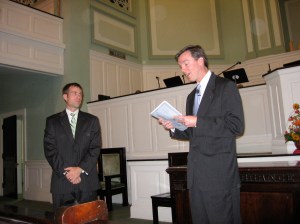
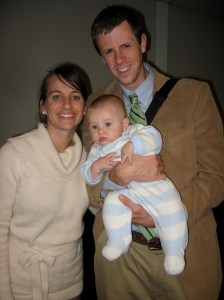
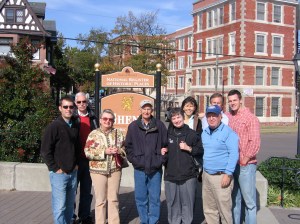
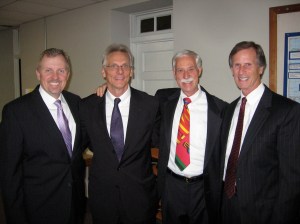
And so I give you the pictures that speak about this past weekend’s celebration of Seth becoming a “Reverend” as he was ordained as a minister in the Presbyterian Church of America. Our hearts are full from the outpouring of love from family and friends, both old and new, many of whom traveled to be with us in celebration. We feel like it was a glimpse of heaven. Thank you all! (or y’all or yous guys …)
IMG_4166

The ordination service as Seth becomes a Reverend through the laying on of hands

IMG_4170

IMG_4171My sister-in-law Nicole, “little” brother Jonathan, and nephew Caleb

IMG_4144

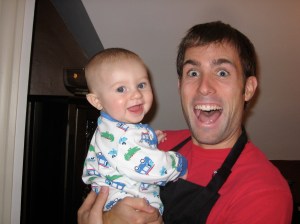
Caleb was the most excited of all for Uncle Seth …

IMG_4152

IMG_4159

Family and out-of-town guests on a tour of Norfolk

IMG_4181

friends from Philadelphia & my parents

IMG_4180

IMG_4190 A few of our new friends in Norfolk

Seth’s family (parents, aunt & uncle) who traveled from New Jersey

IMG_4183

IMG_4164And we all know that no party is complete without my youngest brother Bryan!